കലയും സംസ്കാരവും
Where gods dance and warriors fly
Kerala packs an astonishing range of art into a small place: ritual theatre performed through the night, a martial art older than most nations, and festivals where the whole state sits down to eat together.
Performing arts
Theatre of the eyes
Kerala's classical arts tell epic stories without words: through hand gestures called mudras, painted faces, and eyes trained to express every emotion.
 Theyyam, North Malabar
Theyyam തെയ്യം
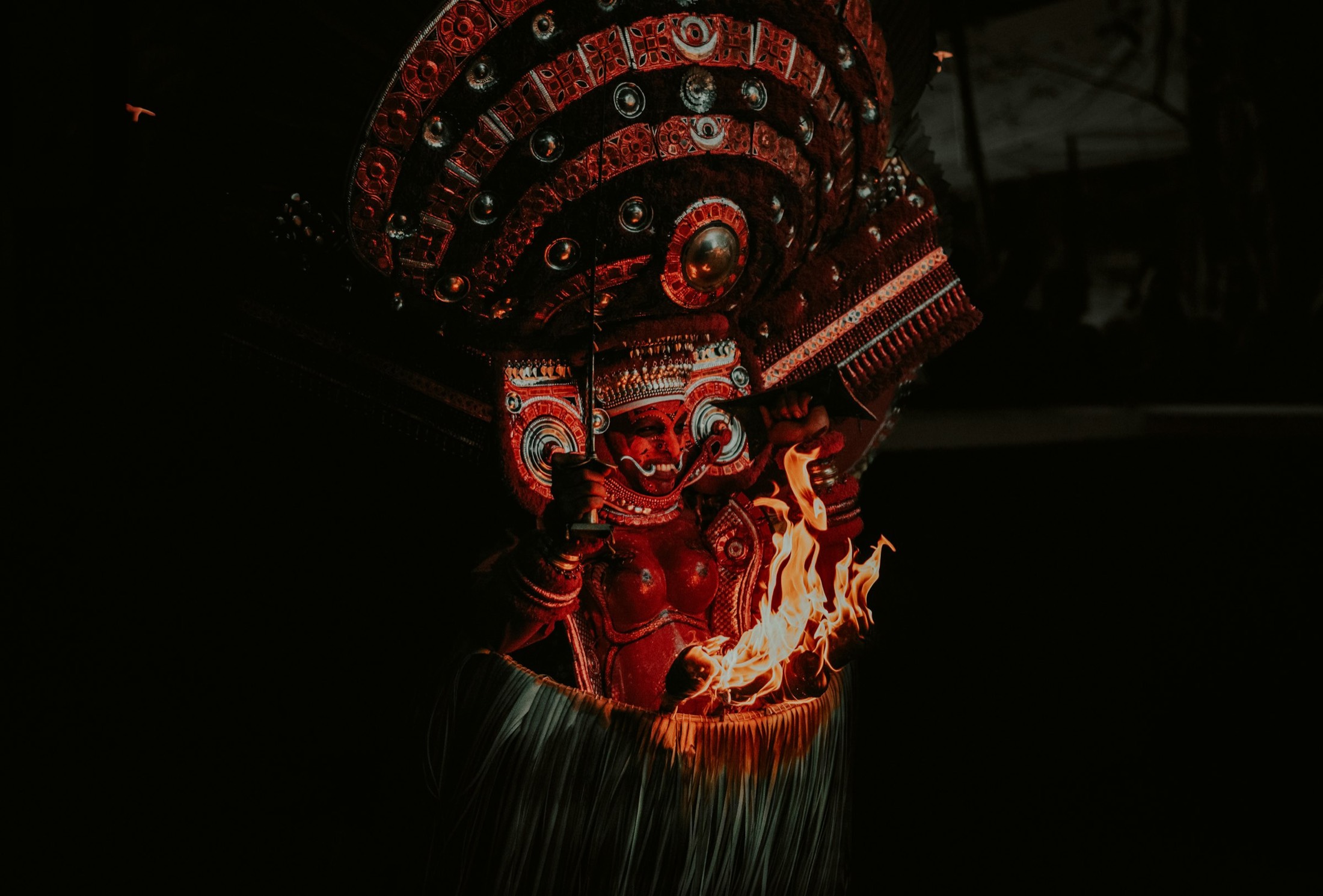
The performer becomes the god
In the villages of northern Kerala, Theyyam is not a show but worship. After days of fasting and hours of elaborate face painting, the performer dons a costume that can rise several metres high and, to the beat of drums, is believed to embody a deity.
Devotees come to the living god for blessings and advice. There are hundreds of distinct Theyyam forms, each with its own story, costume and colours. Performances often run through the night and into dawn.
 Mohiniyattam
Kathakali & Mohiniyattam കഥകളി · മോഹിനിയാട്ടം
Two classical dances, two moods
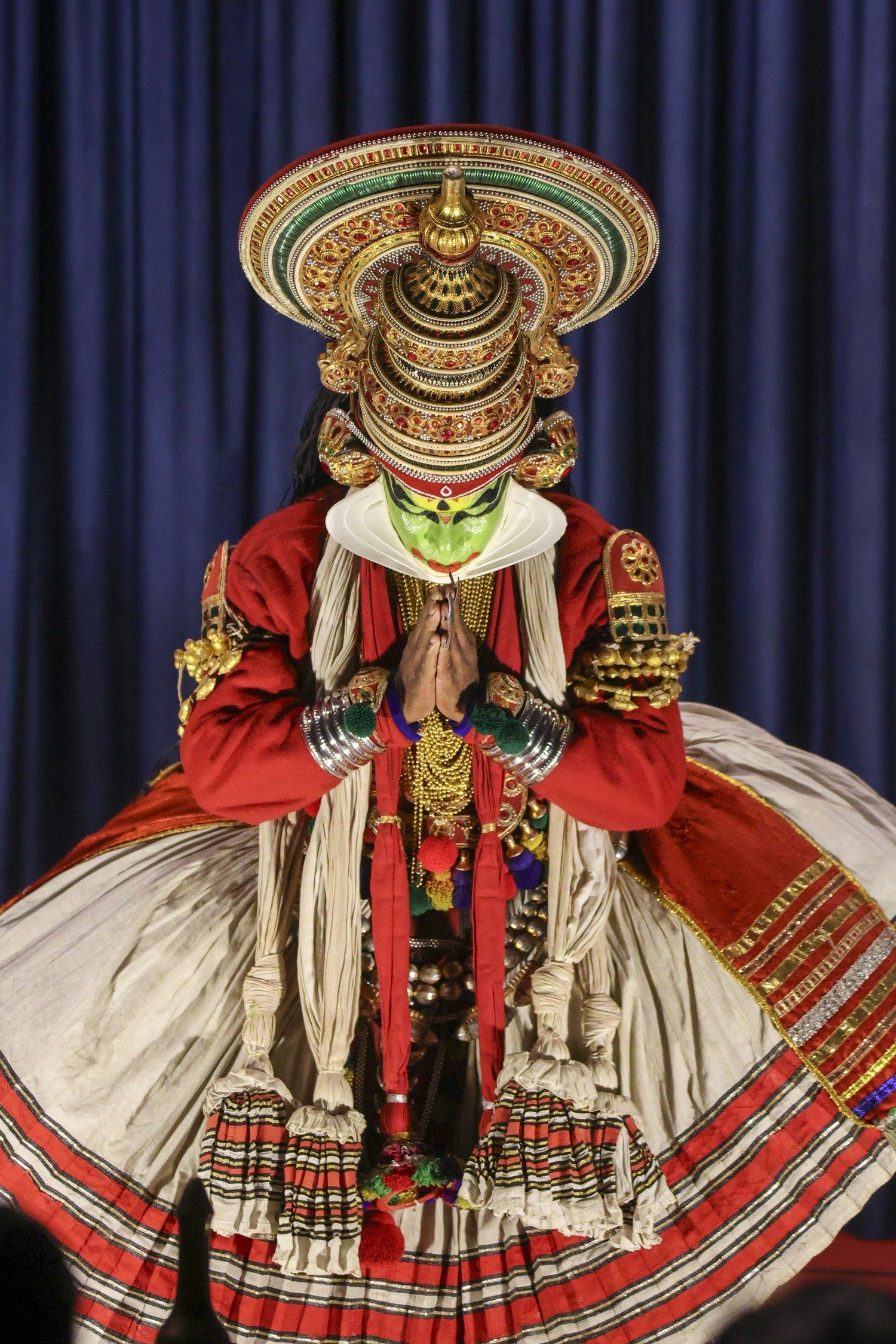
Kathakali, which took shape in the 17th century, is dance-drama on a grand scale. Performers in green faces, huge skirts and crowns act out scenes from the Ramayana and Mahabharata. Make-up alone can take several hours, and actors train for years to control the tiniest muscles of their eyes and face.
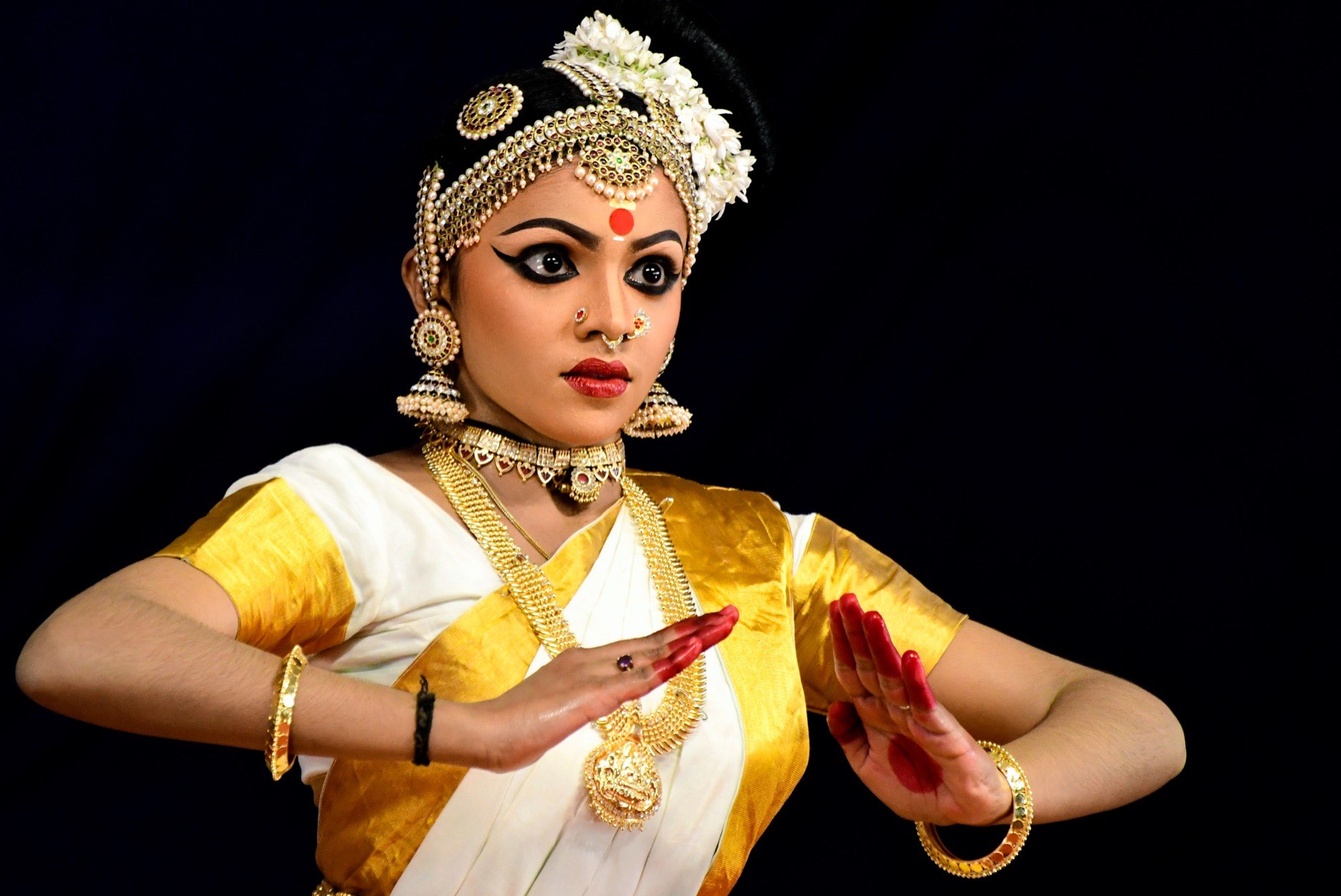
Mohiniyattam, "the dance of the enchantress", is its gentle counterpart: graceful, swaying movements like palm fronds in the breeze, performed by women in the ivory-and-gold Kerala saree.
The Kerala Kalamandalam, founded in 1930 by the poet Vallathol Narayana Menon, keeps these traditions alive and trains performers from around the world.
Koodiyattam
Sanskrit theatre performed in Kerala's temples for around two thousand years, and one of the oldest living theatre traditions on Earth. UNESCO recognised it as a Masterpiece of the Oral and Intangible Heritage of Humanity in 2001.
Mudiyettu
A ritual dance-drama retelling the battle between the goddess Kali and the demon Darika, performed by whole village communities. Inscribed on UNESCO's Intangible Heritage list in 2010.
Chenda & Panchavadyam
The thunder of dozens of cylindrical chenda drums, and the five-instrument temple orchestra Panchavadyam, are the heartbeat of every Kerala festival.
Kalaripayattu കളരിപ്പയറ്റ്
One of the world's oldest martial arts
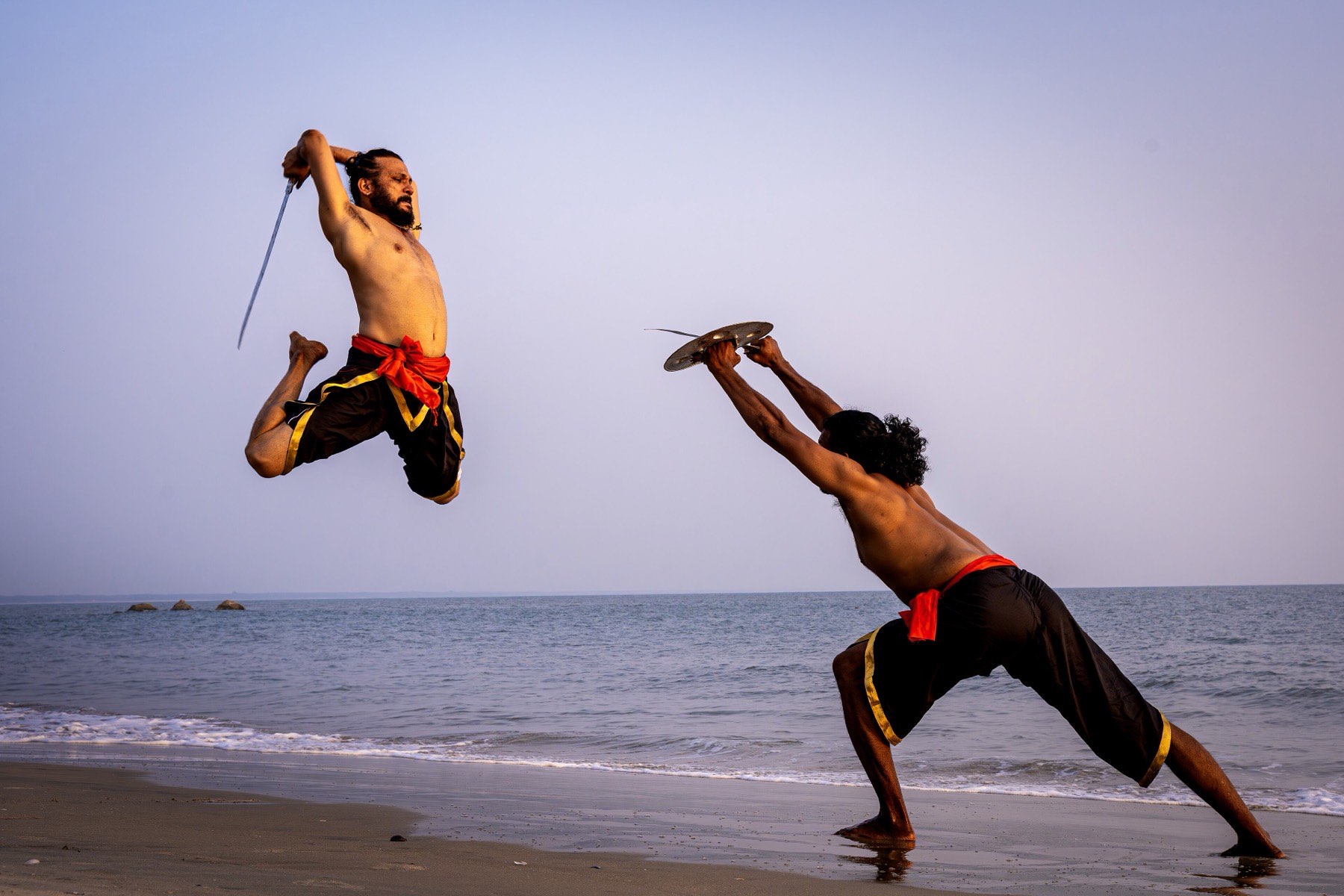
Long before kung fu films, Kerala's warriors trained in the kalari, a sunken earthen practice hall. Kalaripayattu combines leaps, kicks and animal-inspired stances with weapons: sticks, daggers, swords with shields and the urumi, a flexible sword that coils like a whip.
Students also learn massage and healing, because a fighter must know how to repair the body as well as defend it. Today Kalaripayattu influences dancers, actors and athletes worldwide, and choreographers for international films have studied it.
Festivals
The Kerala year
Kerala's festivals are shared across faiths. Christians, Muslims and Hindus all celebrate Onam, and Christmas lights and Eid feasts are part of everyone's calendar.
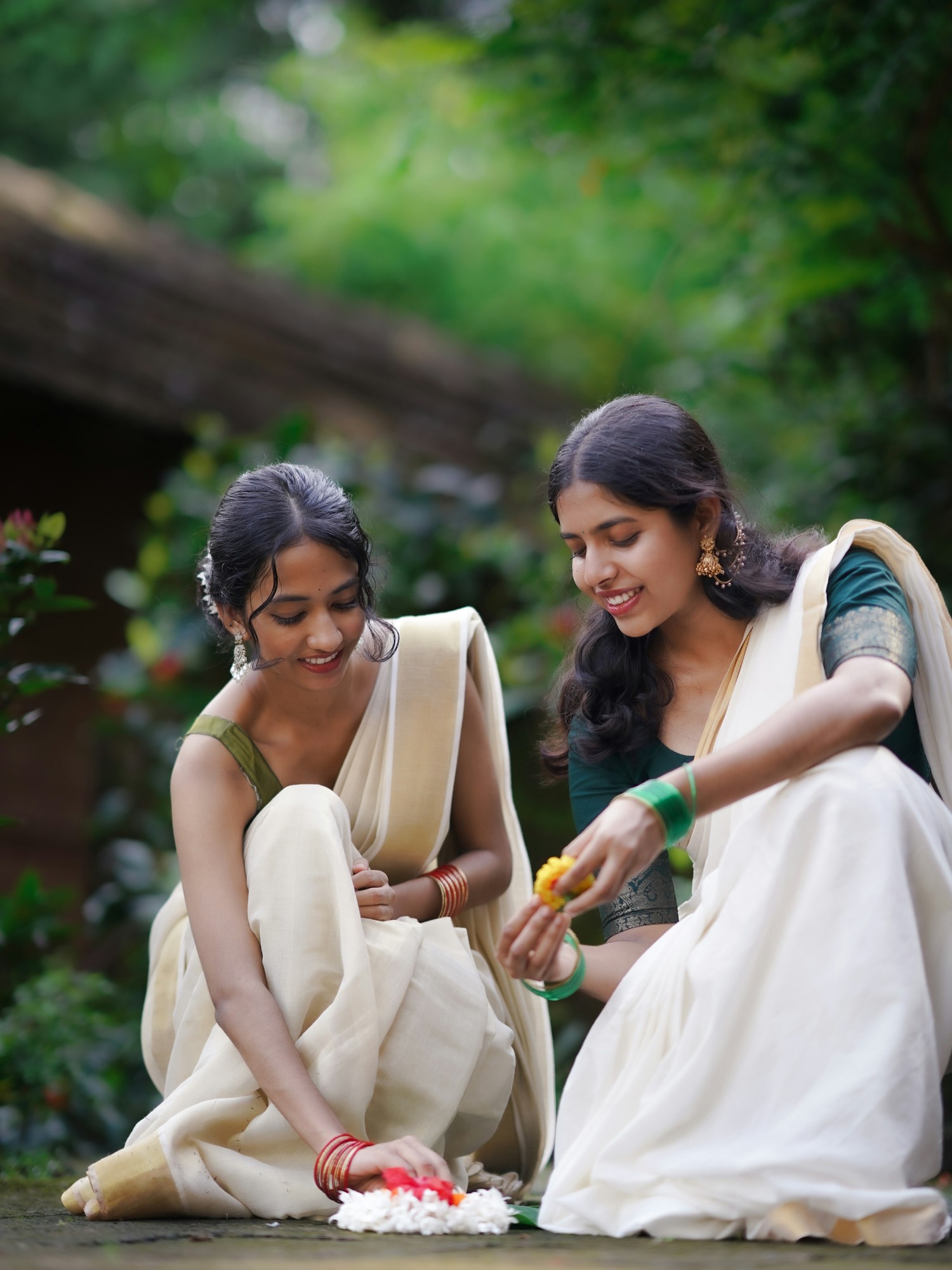 Onam morning
Onam ഓണം · August–September
Ten days for a beloved king
Onam welcomes home Mahabali, the generous demon-king of legend, whose rule was a golden age of equality. For ten days, families make a new flower carpet each morning, each larger than the last.
On Thiruvonam, the main day, everyone wears new clothes, often the cream-and-gold kasavu, and sits down to the Onasadya. Across the state, Vallam Kali snake-boat races see long, slender boats with crews of a hundred or more rowers racing to the rhythm of boat songs. The Nehru Trophy race on Punnamada Lake has been held since 1952.
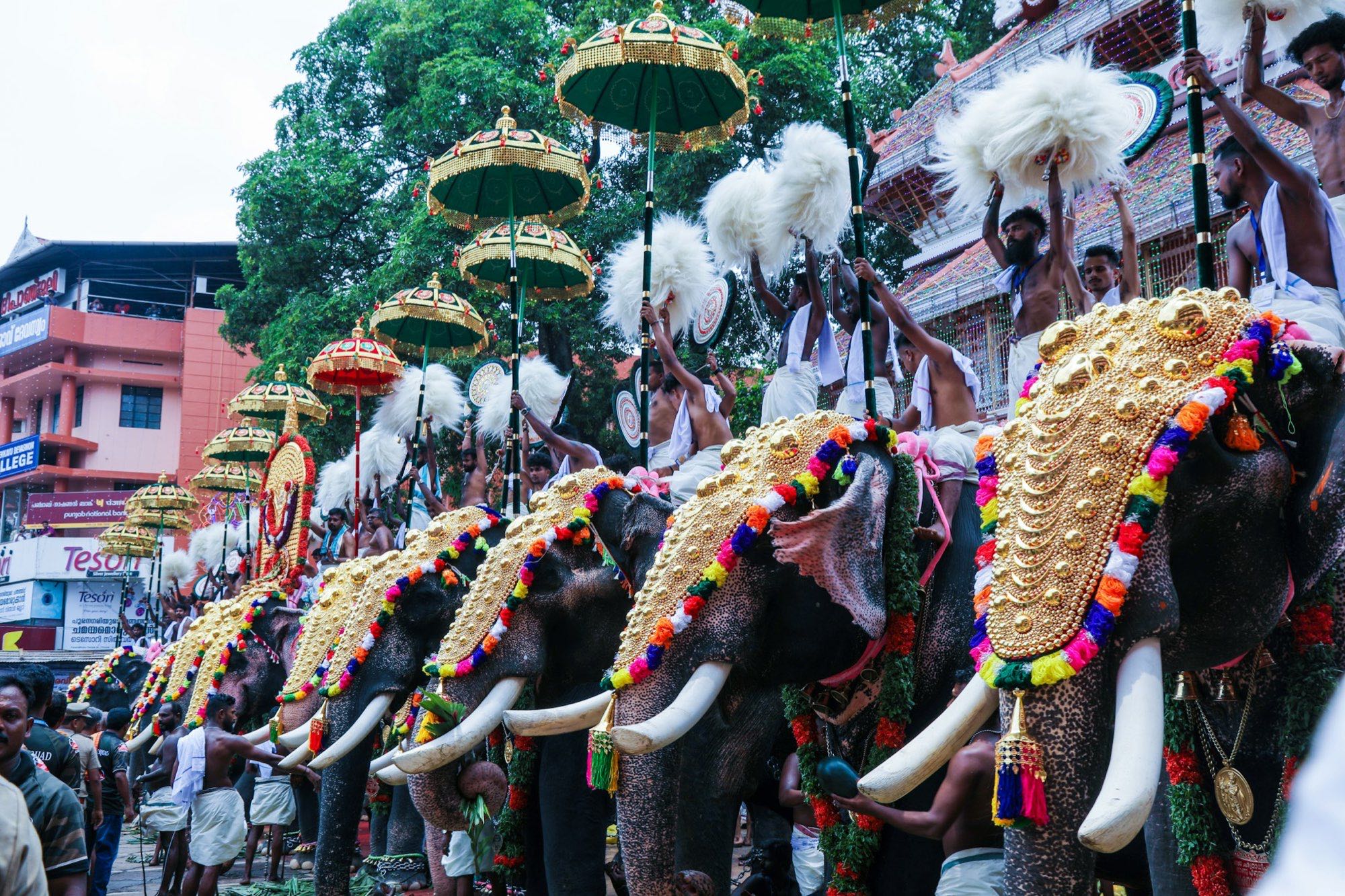
The Pooram.
Gold-caparisoned elephants, silk parasols and the thunder of chenda drums.
Vishu വിഷു
The Kerala new year. The first sight of the morning, the Vishukkani, is an arrangement of golden flowers, fruit, rice and a lamp, meant to bring a year of plenty. Elders give children coins, called kaineettam.
Thrissur Pooram
Called the mother of all festivals: dozens of caparisoned elephants, rival orchestras of hundreds of drummers, and a spectacular display of parasols and fireworks.
Kerala Piravi
Kerala's birthday, marking the formation of the state in 1956. Malayalees worldwide celebrate with cultural programmes.
Christmas
Kerala is home to some of the world's oldest Christian communities. Star lanterns hang outside homes of every faith, followed by plum cake and carols.
Food ഭക്ഷണം
Coconut, spice and the sea
Kerala cooking is built on coconut (grated, pressed into milk, or as oil), curry leaves, and the spices that once made the coast famous: black pepper, cardamom, cloves and cinnamon.
The sadya is the showpiece: a feast of more than twenty dishes served in a set order on a banana leaf. Rice, sambar, avial (vegetables in coconut and yoghurt), olan, thoran, crisp banana chips, pickles, and at the end, sweet payasam.
Everyday favourites include appam (lacy rice pancakes) with stew, puttu with chickpea curry, fish moilee cooked in coconut milk, Malabar biryani, and the flaky, layered Kerala parotta.
The best way to understand it is to taste it. Come to one of our celebrations.
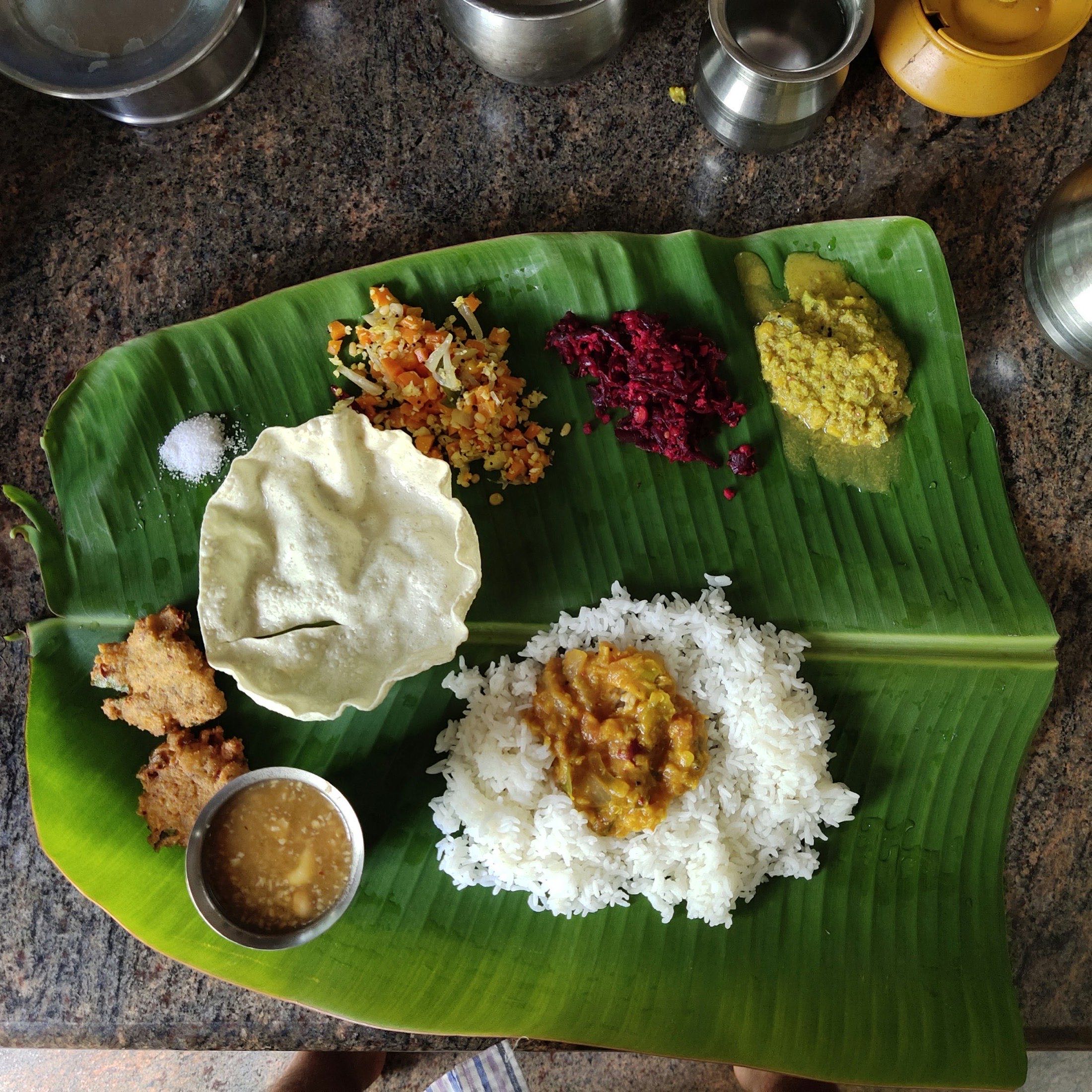 A meal on a banana leaf
Everyday Kerala
Details you will notice
Kasavu
Cream handloom cotton with a gold border, worn as a saree by women and a mundu (a wrap) by men. Its gold border is the accent colour of this website.
Nilavilakku
The tall brass oil lamp lit at the start of every auspicious occasion, including our events. It appears in our logo.
Kerala murals
Temple and palace wall paintings in rich ochre, red, green and gold, made with natural pigments.
Aranmula mirror
A mirror made of polished metal alloy, not glass, by a few families in one village, using a technique kept secret for generations.
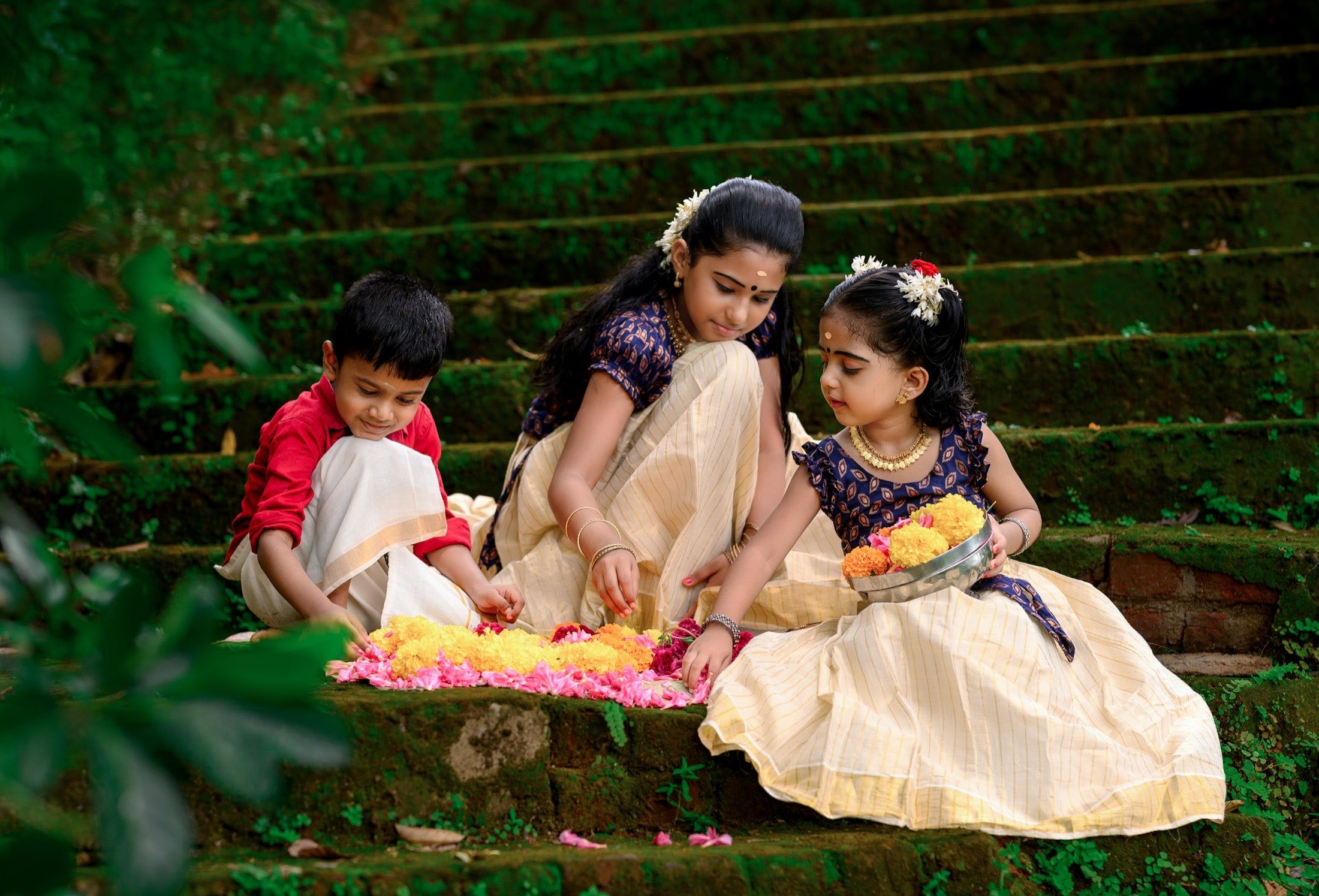
Celebrate with us
Onam in Sarnia is for everyone
Bring your family, your colleagues and your appetite.
See our celebrations