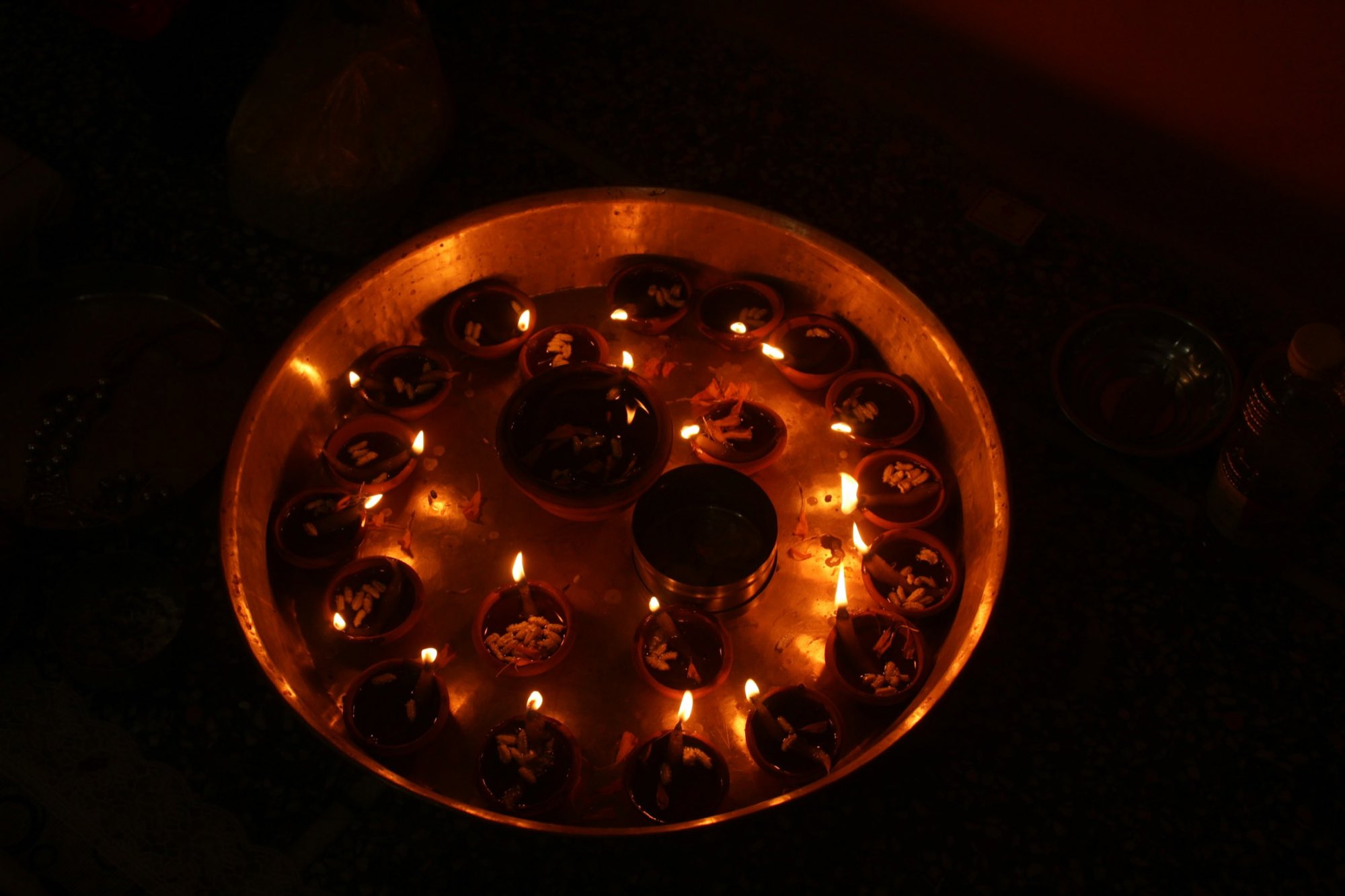
വിശ്വാസവും പൈതൃകവും
Four faiths. One shore.
Long before Europe's age of exploration, Christians, Jews, Muslims and Hindus were living side by side on Kerala's coast. Few places on Earth hold so much shared religious history in so small a space.
Religious composition of Kerala (Census of India 2011): Hindu 54.7%, Muslim 26.6%, Christian 18.4%.
Christianity in India began here.
Kerala's Christians trace their faith to the apostle Thomas, one of the twelve disciples of Jesus, making theirs one of the oldest Christian communities anywhere in the world.
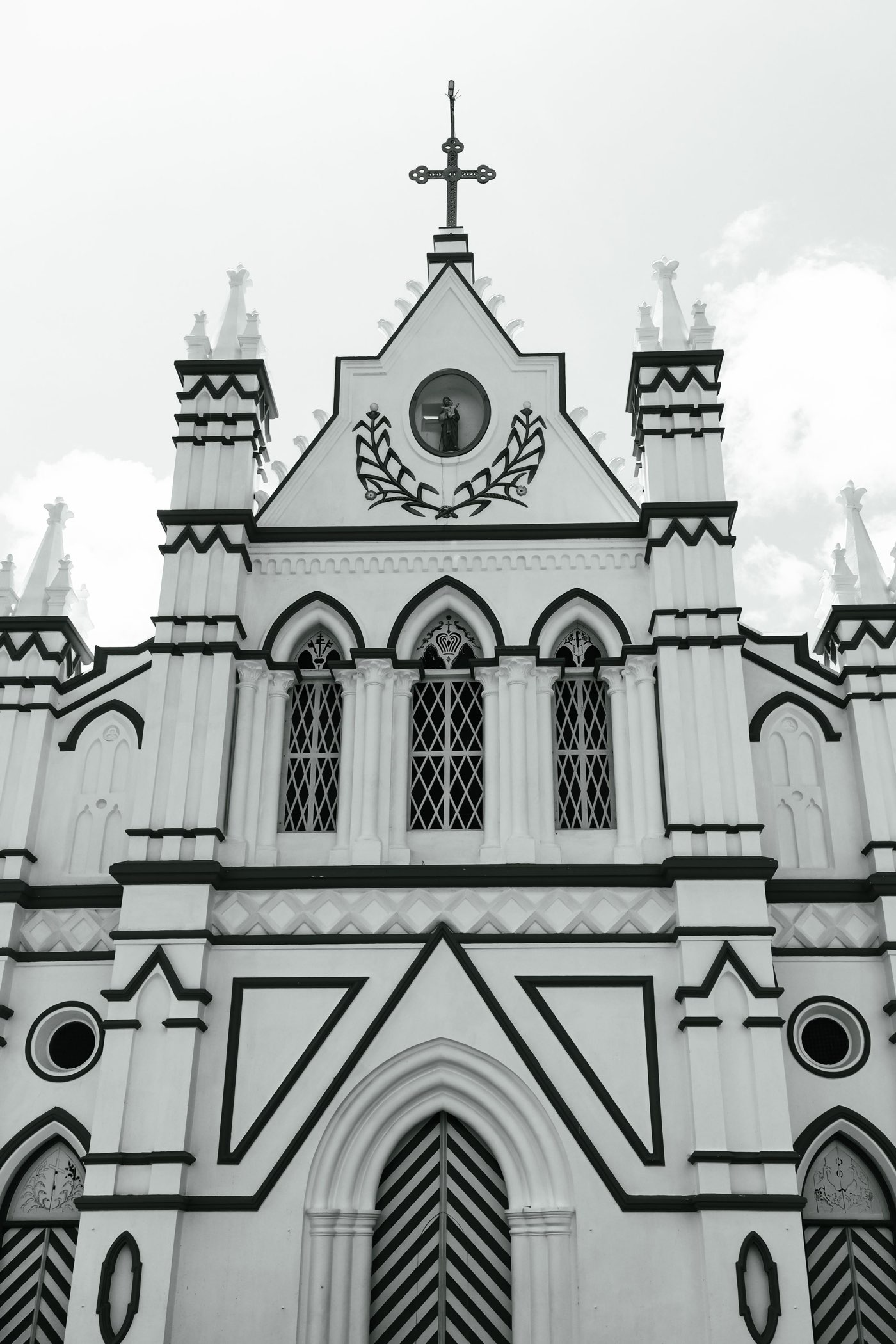 St Mary's Basilica, Champakulam
The apostle who sailed east.
According to a tradition held for nearly two thousand years, Thomas arrived in AD 52 at the great port of Muziris, near today's Kodungallur, sailing on the same monsoon winds that carried Roman ships to buy pepper. He preached along the coast, founded communities, and is said to have been martyred at Mylapore, near Chennai, in AD 72.
The families who received the faith became known as Nasranis or Saint Thomas Christians. They prayed in Syriac, close to the Aramaic spoken by Jesus, kept close ties with the Church of the East in Persia, and lived as a respected trading community under Hindu kings. Copper plates granted in 849 CE to the church at Kollam record the privileges they were given.
When the Portuguese arrived in 1498, they were astonished to find Christians already here who had been worshipping for some fourteen centuries.
The seven and a half churches.
Tradition credits St Thomas with founding seven churches, and a "half church", along the coast. All remain places of pilgrimage today.
Kodungallur
Also called Maliankara, where Thomas is said to have first landed.
Palayoor
Near Chavakkad in Thrissur district; one of the most visited of the seven.
Kottakkavu
At North Paravur, near the Periyar river.
Kokkamangalam
In Alappuzha district, near the backwaters.
Niranam
On the banks of the Pamba river in Pathanamthitta district.
Nilakkal
Also known as Chayal, in the hills near Sabarimala.
Kollam
Ancient Quilon, a major port on the spice route.
Thiruvithamcode
The Arappally or "half church", today just across the border in Tamil Nadu.
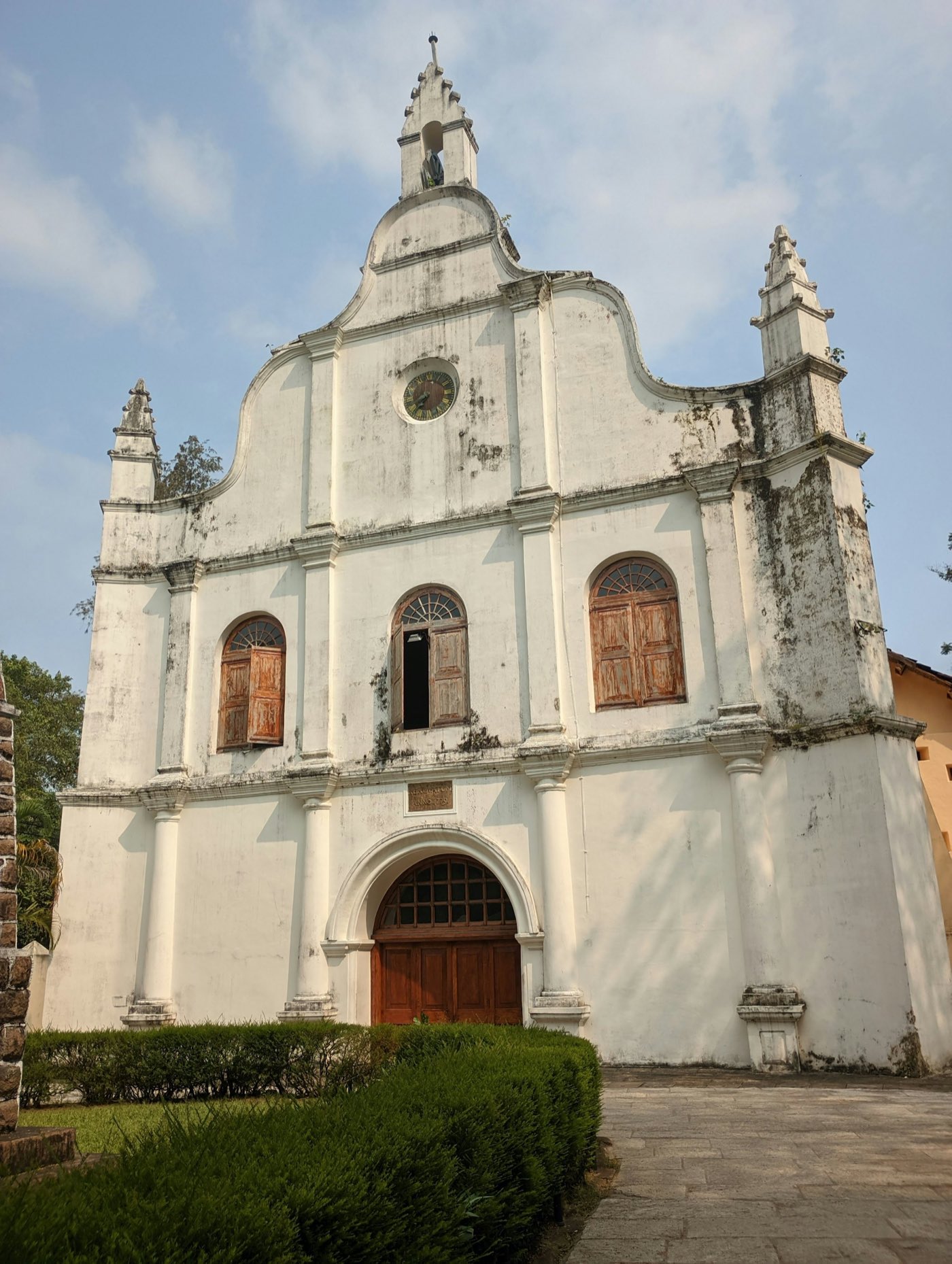 St Francis Church, Fort Kochi
Where Vasco da Gama was first laid to rest.
Built by the Portuguese in 1503, St Francis Church in Fort Kochi is the oldest European-built church in India. The explorer Vasco da Gama died in Kochi in 1524 and was buried here; fourteen years later his remains were taken home to Lisbon. His gravestone can still be seen inside.
The church passed from Portuguese Catholics to Dutch Protestants and then to the Anglicans, a story of the colonial centuries told in a single building.
A short walk away stands Santa Cruz Cathedral Basilica, first built by the Portuguese in the early 1500s and rebuilt in its present Gothic form in the early 20th century.
Many churches, one heritage
The St Thomas tradition lives on in the Syro-Malabar and Syro-Malankara Catholic churches, the Malankara Orthodox and Jacobite Syrian churches, the Mar Thoma Church, and others, alongside Latin Catholic and Protestant communities.
Distinctly Kerala
Kerala Christians kept many local customs: lamps lit at church doors, brides in the kasavu-style saree with a minnu pendant, and festive tables of appam and stew.
Malayattoor
Every year, pilgrims climb the hill at Malayattoor, where tradition says St Thomas prayed, many of them carrying wooden crosses.
India's oldest Jewish community.
Jewish traders reached the Malabar coast in antiquity. Some traditions link their arrival to King Solomon's merchant fleets; others to the years after the destruction of the Second Temple in 70 CE.
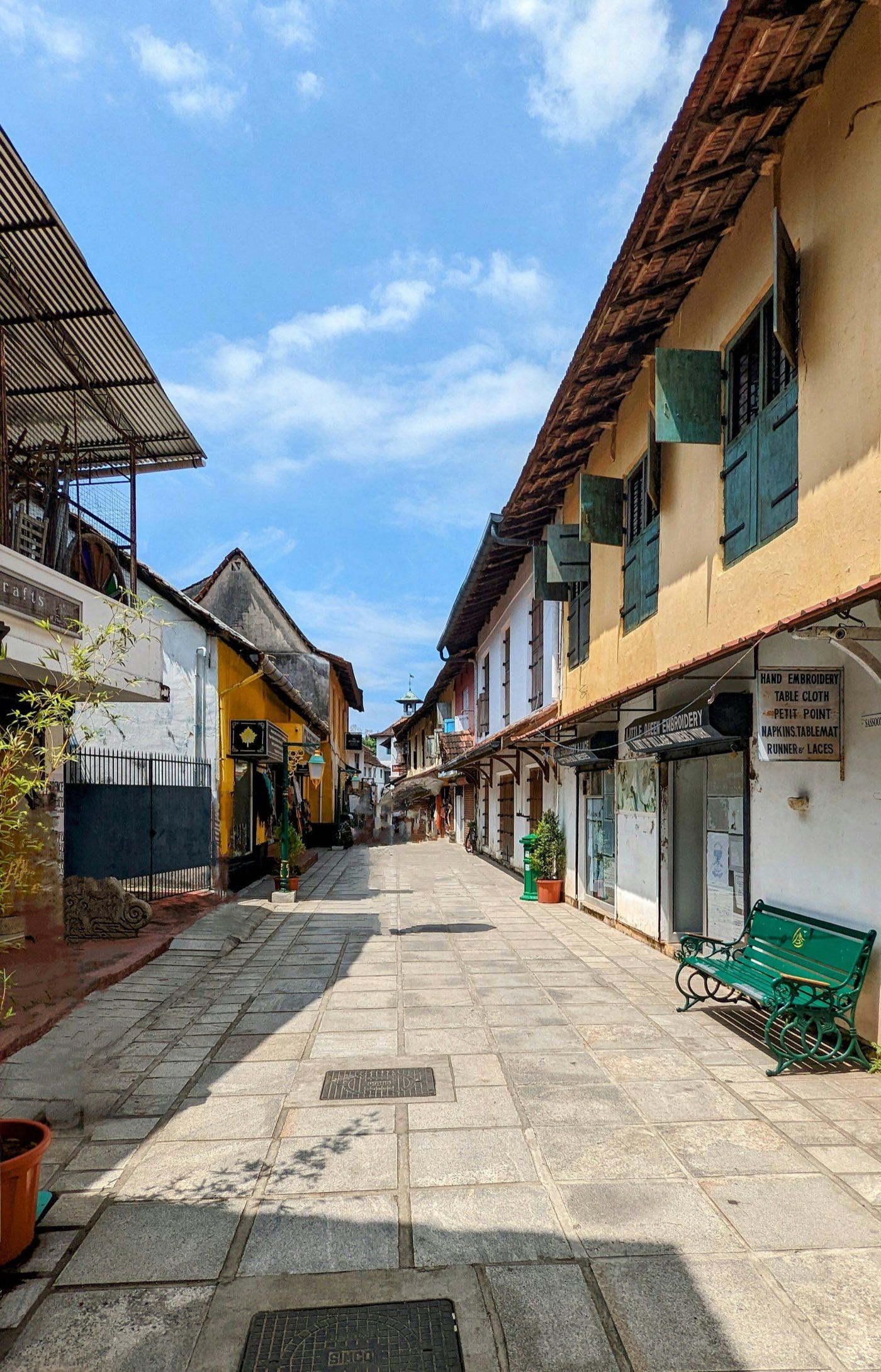
Jew Town, Mattancherry.
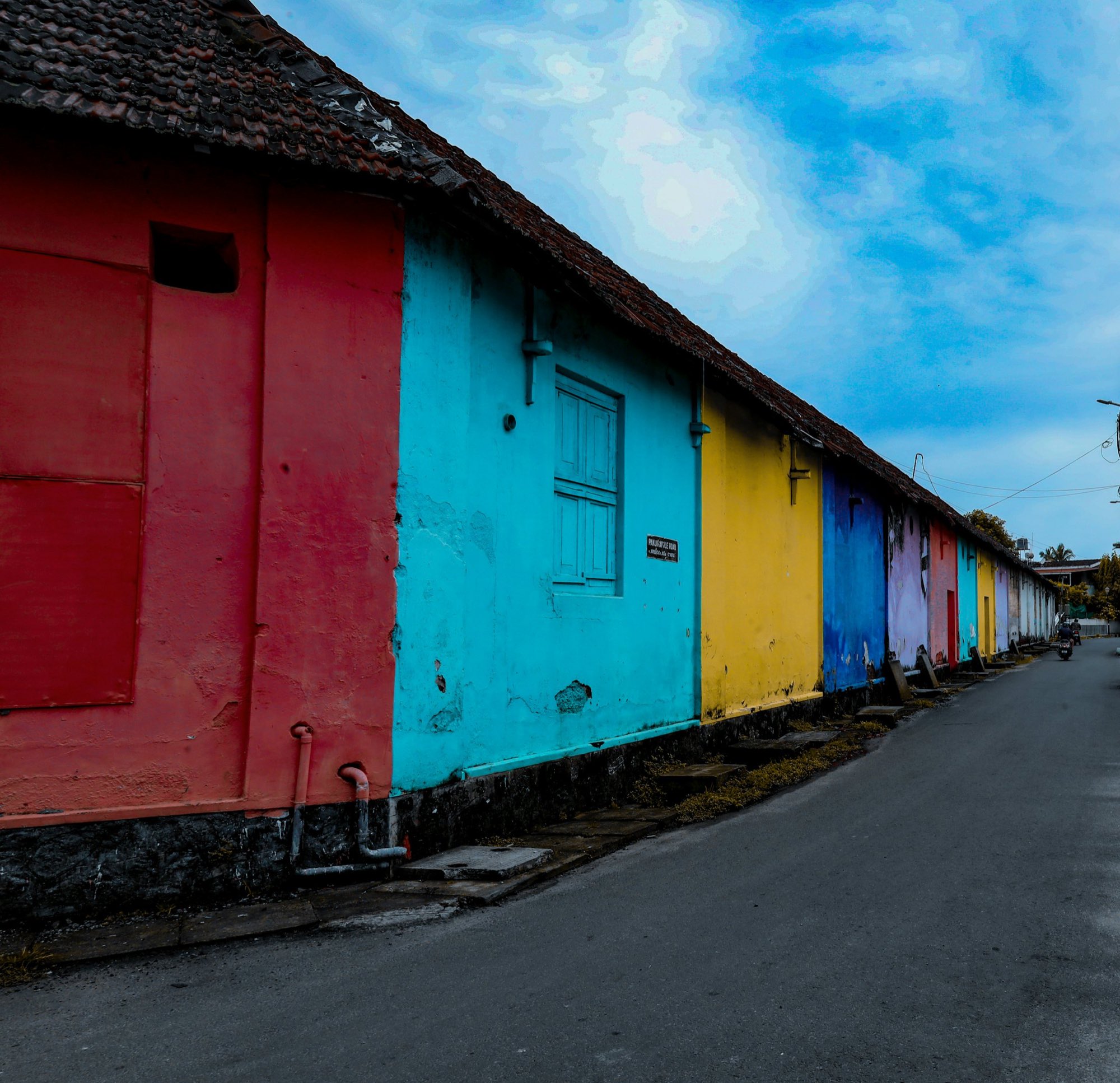
A single street of old merchant houses, now antique and spice shops, leading to the synagogue.
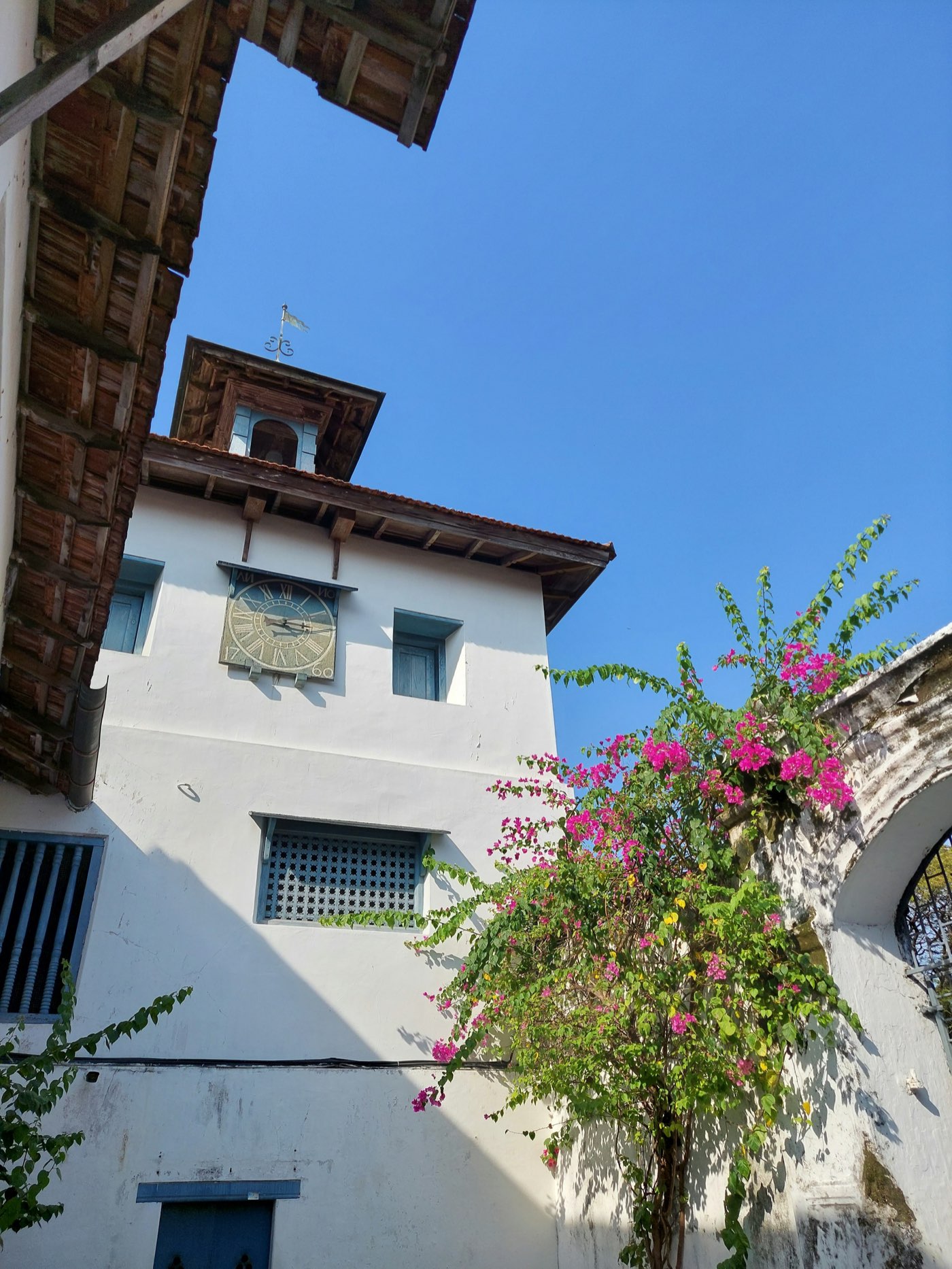 Paradesi Synagogue clock tower, 1760
Four centuries of prayer.
Behind a quiet courtyard at the end of Jew Town Road stands the Paradesi Synagogue. Its clock tower, added in 1760, has faces marked in Hebrew, Roman and Malayalam numerals, a small monument to the three worlds that met here.
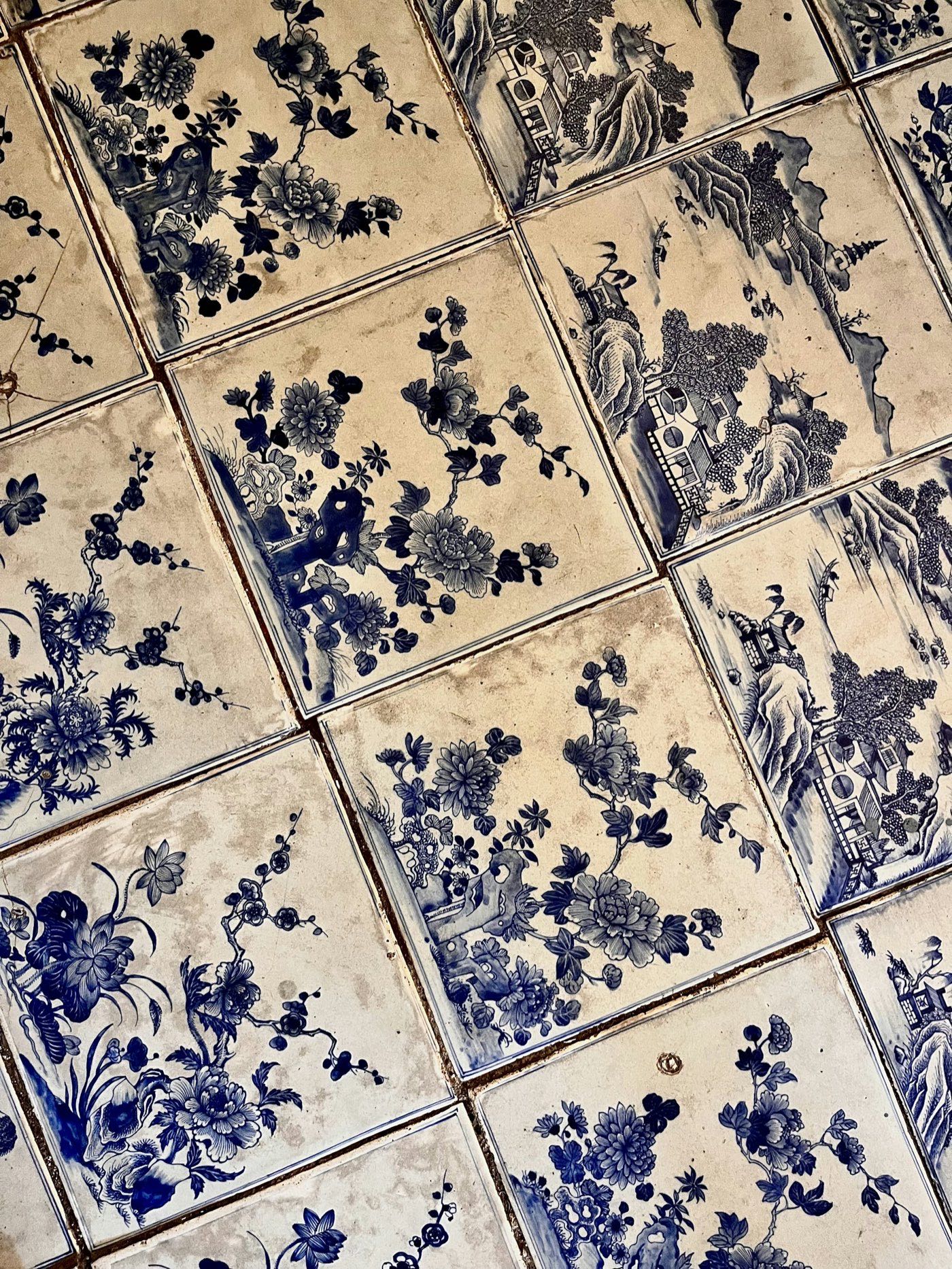
Visitors remove their shoes to step onto the hand-painted floor, beneath a canopy of chandeliers, where services were held for over four hundred years.
A charter from a Chera king
Around the year 1000, the Chera ruler Bhaskara Ravi Varman granted the Jewish leader Joseph Rabban a set of copper plates confirming rights and privileges for his community at Cranganore (Kodungallur). The plates are still kept by the community in Kochi and are among the most important documents of Indian Jewish history.
The synagogue beside the palace
Built in 1568 next to the Mattancherry Palace of the Raja of Kochi, the Paradesi Synagogue is the oldest active synagogue in the Commonwealth. Its floor is laid with hand-painted blue-and-white Chinese tiles, brought from Canton in the 18th century; its interior glows with Belgian glass chandeliers. A clock tower was added in 1760.
Synagogues across the backwaters
Jewish communities also lived in Chendamangalam, Paravur, Mala and Ernakulam. The synagogue at Chendamangalam, built in 1614, has been carefully restored as a museum of Kerala Jewish life.
A community that moved, and remembered
After the founding of Israel, almost all of Kerala's Jews emigrated there, where they still sing Malayalam Jewish songs and cook Kerala dishes. Only a handful remain in Kochi, but Jew Town, its synagogue and its cemetery keep the memory alive, and visitors come from around the world.
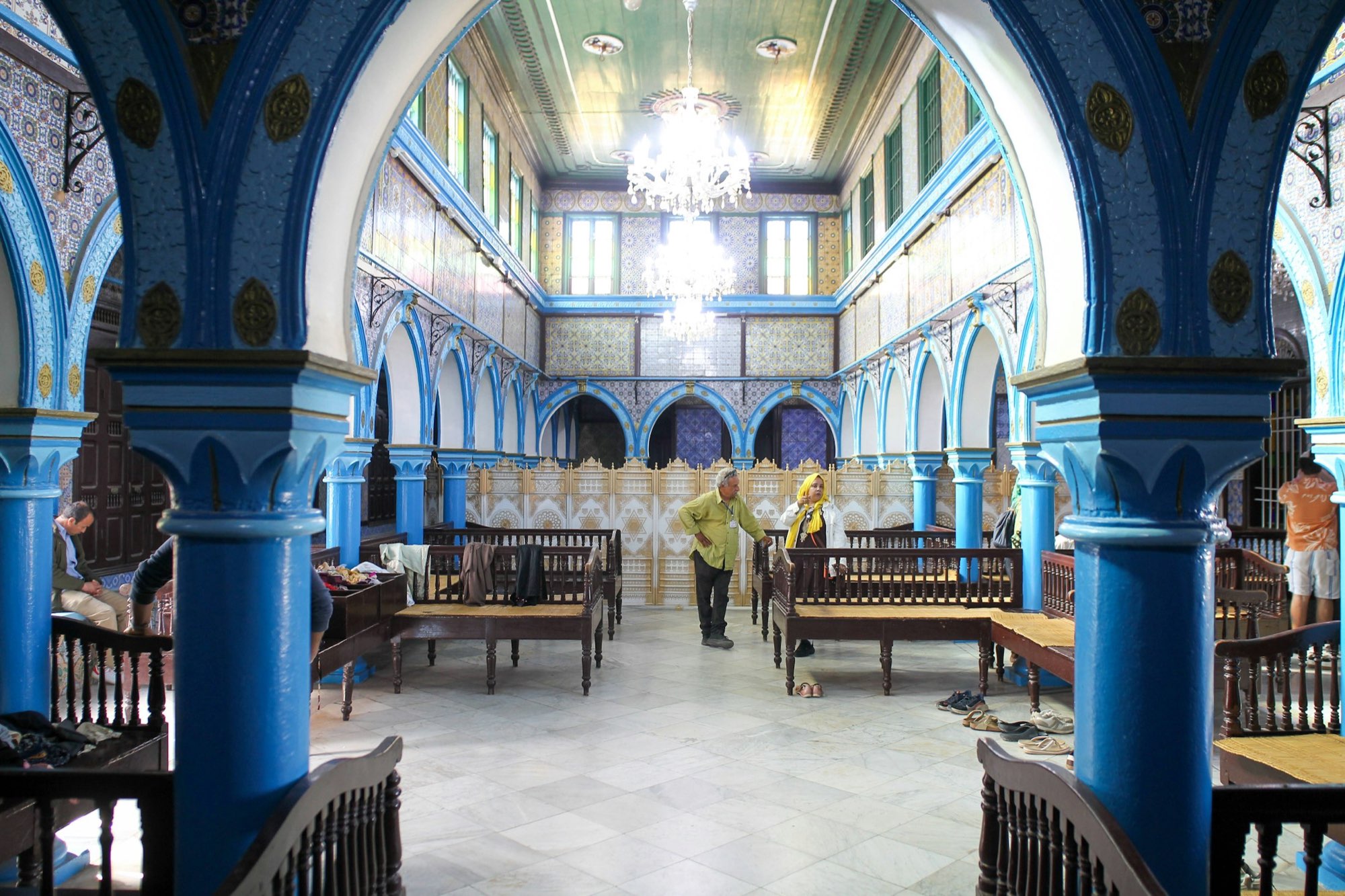
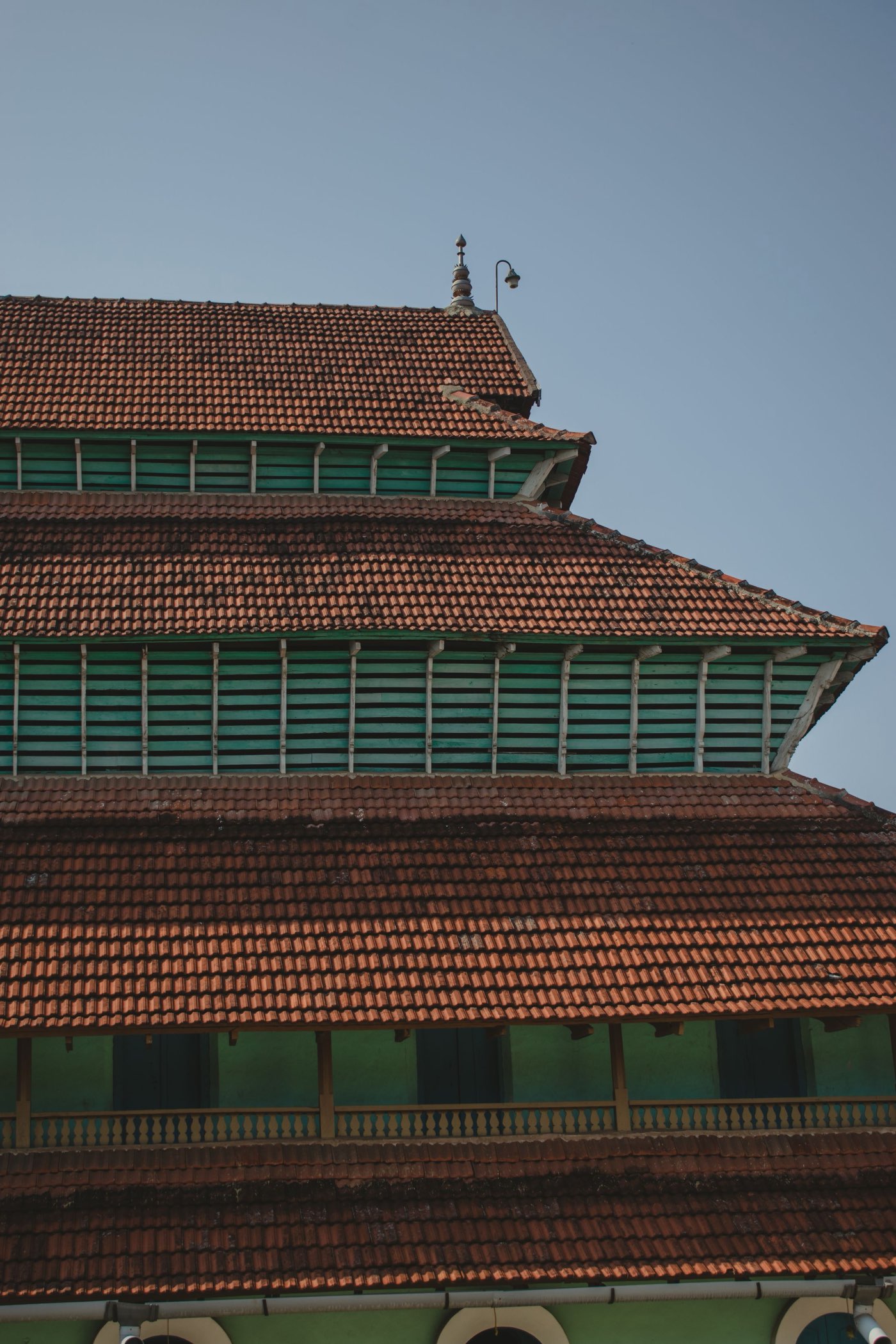 Mishkal Mosque, Kozhikode
Brought by the monsoon, not the sword.
Arab merchants had sailed to Kerala for centuries before Islam, and it was through these trading friendships that the new faith arrived, peacefully, in the 7th century.
The Cheraman Juma Masjid at Kodungallur is traditionally dated to 629 CE, which would make it one of the oldest mosques in South Asia. Legend links it to Cheraman Perumal, a Chera king said to have travelled to Arabia and embraced Islam. Unlike later mosques, it was built in Kerala's own style, with a sloping tiled roof and a temple-like brass lamp.
Kerala's Muslims, especially the Mappilas of Malabar, created a rich culture of their own: the multi-storey wooden Mishkal Mosque of Kozhikode, Mappila songs written in Arabi-Malayalam, the graceful Oppana dance at weddings, and Malabar's famous biryani.
Sloping roofs, brass lamps, ancient rites.
Kerala's temples look like no others in India: low, wooden, copper-roofed and set in courtyards of lamps, built for a land of heavy monsoon rain.
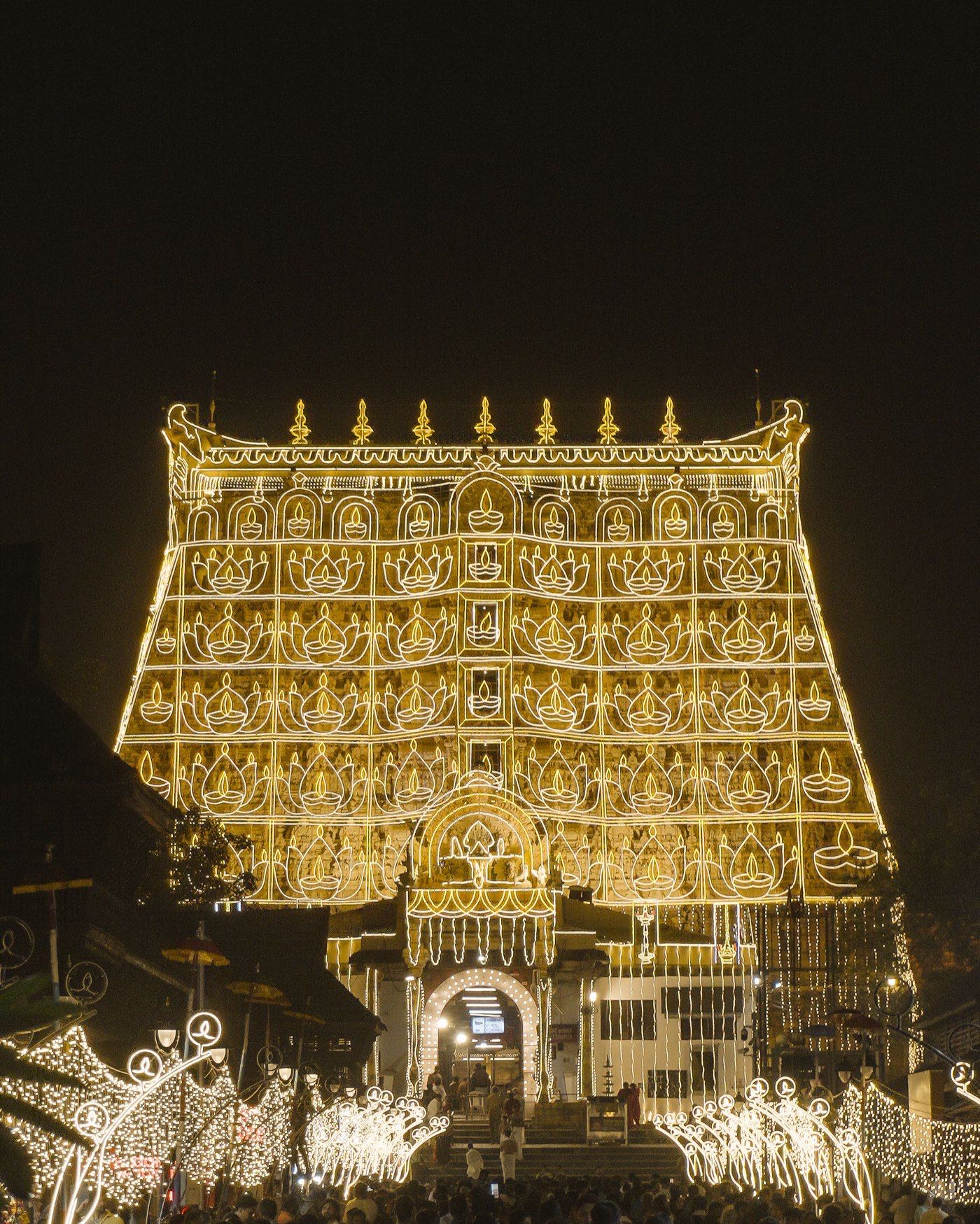
Sree Padmanabhaswamy Temple.
Thiruvananthapuram, lit for a festival night.
Sree Padmanabhaswamy
The great temple of the capital, dedicated to Vishnu reclining on the serpent Ananta. In 2011, sealed vaults beneath it were found to hold one of the largest collections of gold and jewels ever recorded.
Sri Krishna Temple
One of the most important Krishna temples in India, known for its temple elephants and for the many weddings held at its doors each day.
Sabarimala
A forest hill shrine to Lord Ayyappa, reached on foot after weeks of fasting. Its season draws millions of pilgrims, making it one of the largest annual pilgrimages in the world.
Attukal Pongala
Each year, women cook offerings of sweet rice in clay pots along the city's streets, in one of the largest gatherings of women anywhere, recognised by Guinness World Records.
Birthplace of Adi Shankara
The village on the Periyar river where the 8th-century philosopher was born, now a centre of learning and pilgrimage.
Sivagiri
The ashram of Sree Narayana Guru, whose message of one caste, one religion and one God for all shaped modern Kerala.
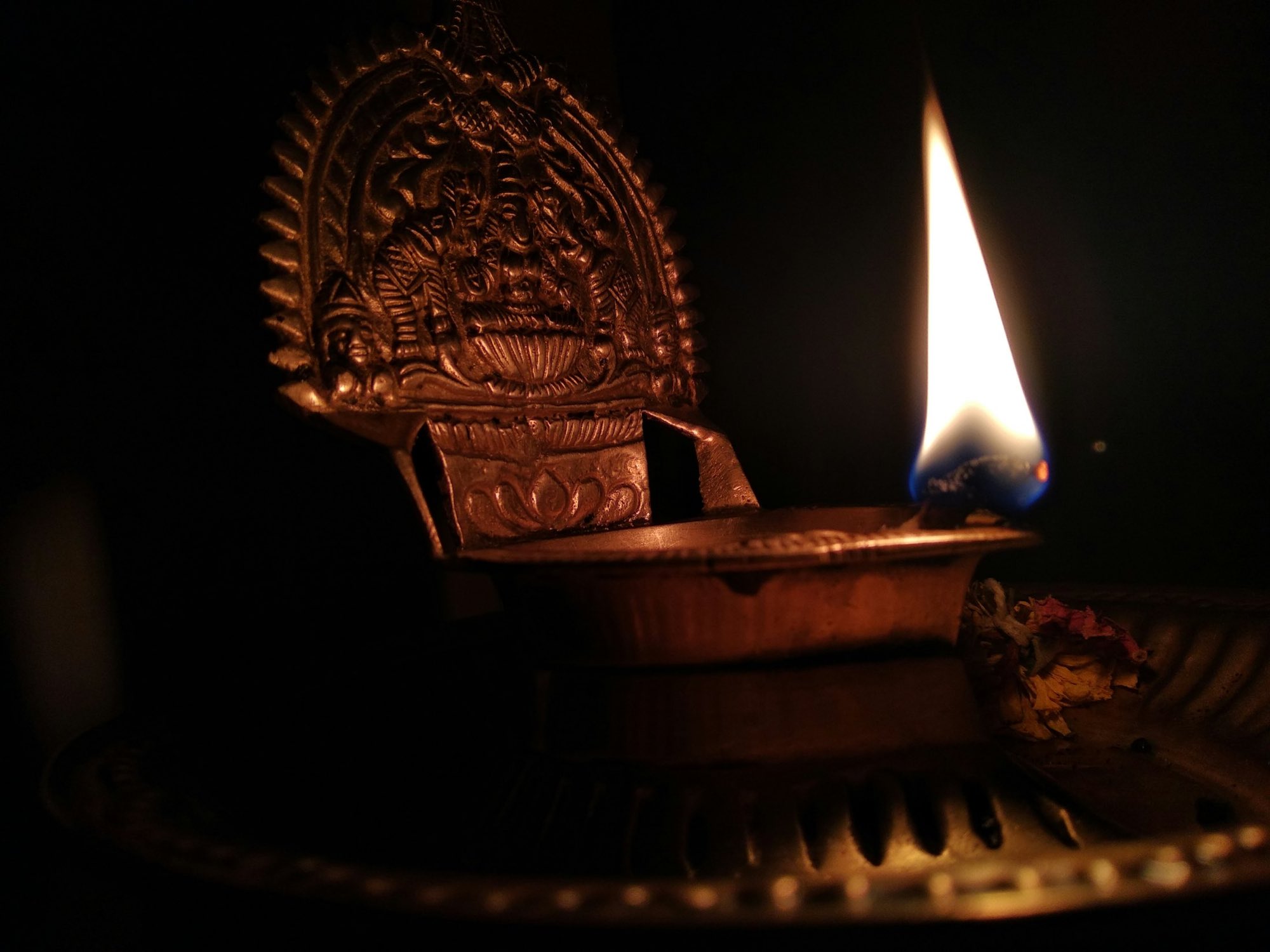
Jain and Buddhist echoes.
Jain and Buddhist communities flourished in early Kerala. A 13th-century Jain temple still stands at Sulthan Bathery in Wayanad, and black granite Buddha statues, such as the Karumadi Kuttan near Alappuzha, recall a time when monks walked the same trade routes.
Many scholars see Buddhist influence in Kerala's early hospitals, schools and its tradition of Ayurveda.
A mosque on the path to a temple.
On the pilgrim road to Sabarimala, at Erumeli, stands a mosque dedicated to Vavar, honoured as the Muslim friend and companion of Lord Ayyappa. Hindu pilgrims stop there to pray before continuing up the mountain, a tradition that has lasted for generations.
It is one example among many. Christian and Muslim families celebrate Onam. Hindu neighbours light star lanterns at Christmas and share iftar at Ramadan. Temple festivals, church feasts and mosque processions use the same drums, the same elephants and the same brass lamps.
That spirit came with Malayalees to Canada, and it is the spirit of our association: every faith, and none, is welcome at our table.
“One caste, one religion, one God for humankind.”Sree Narayana Guru
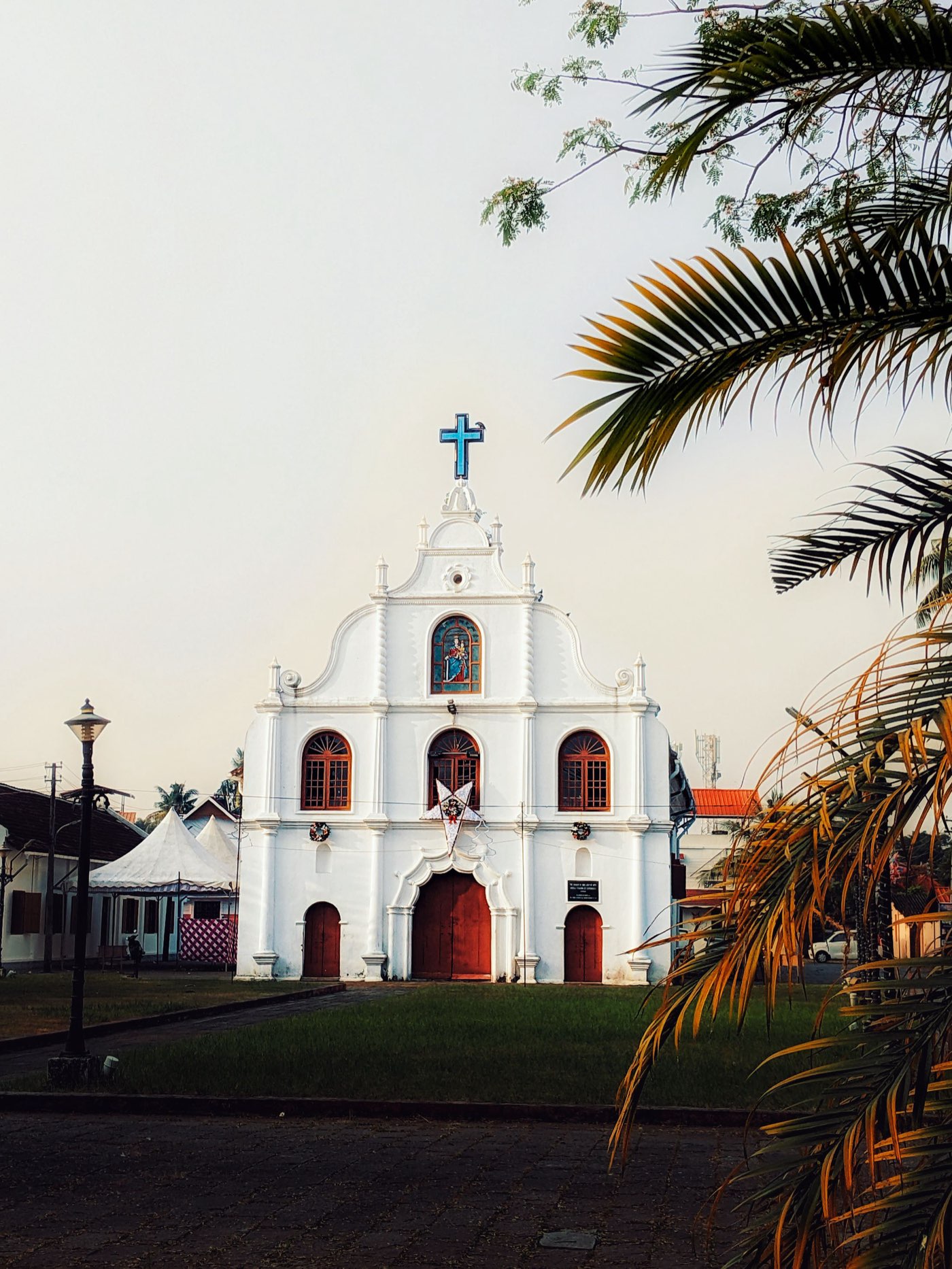
Church
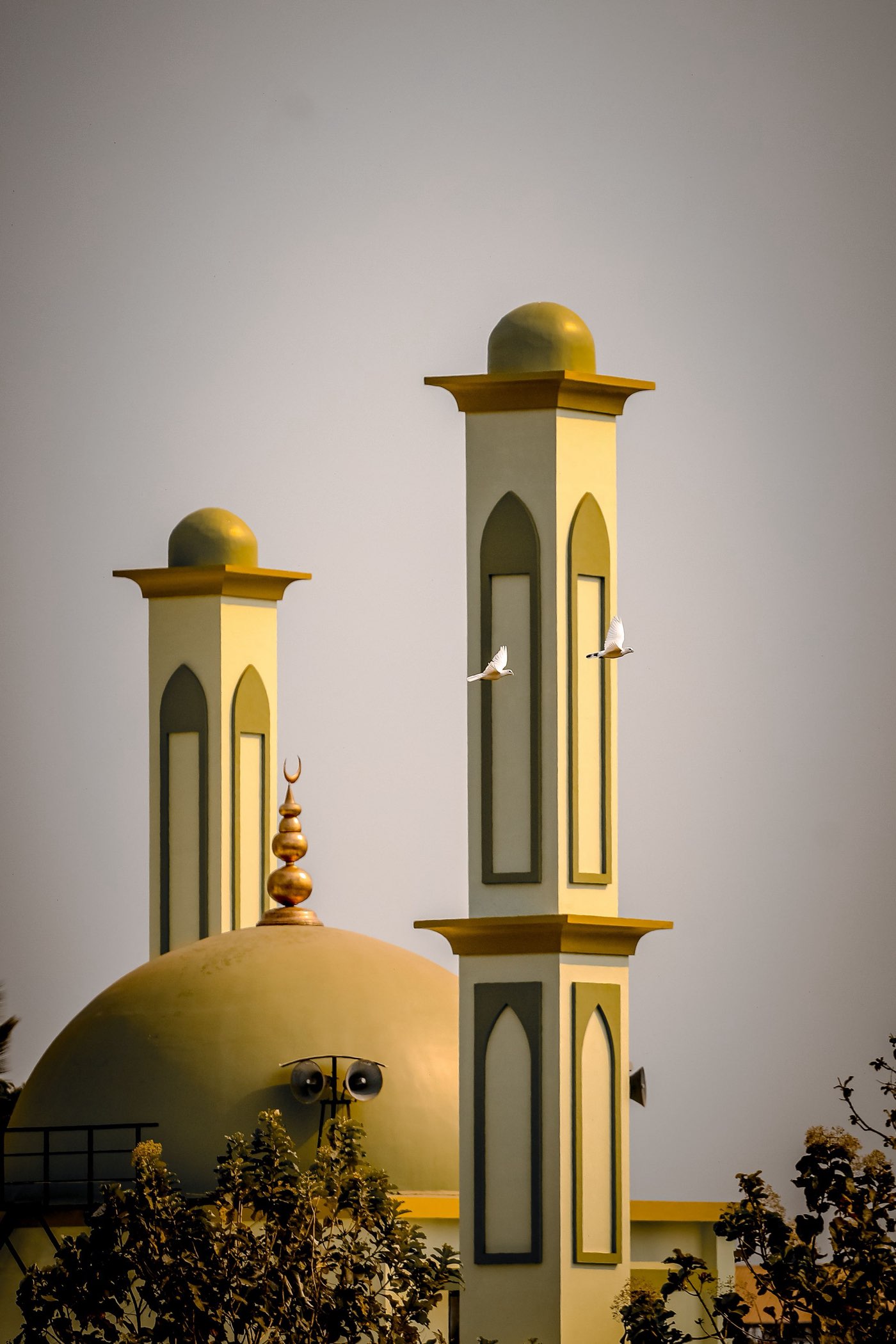
Mosque
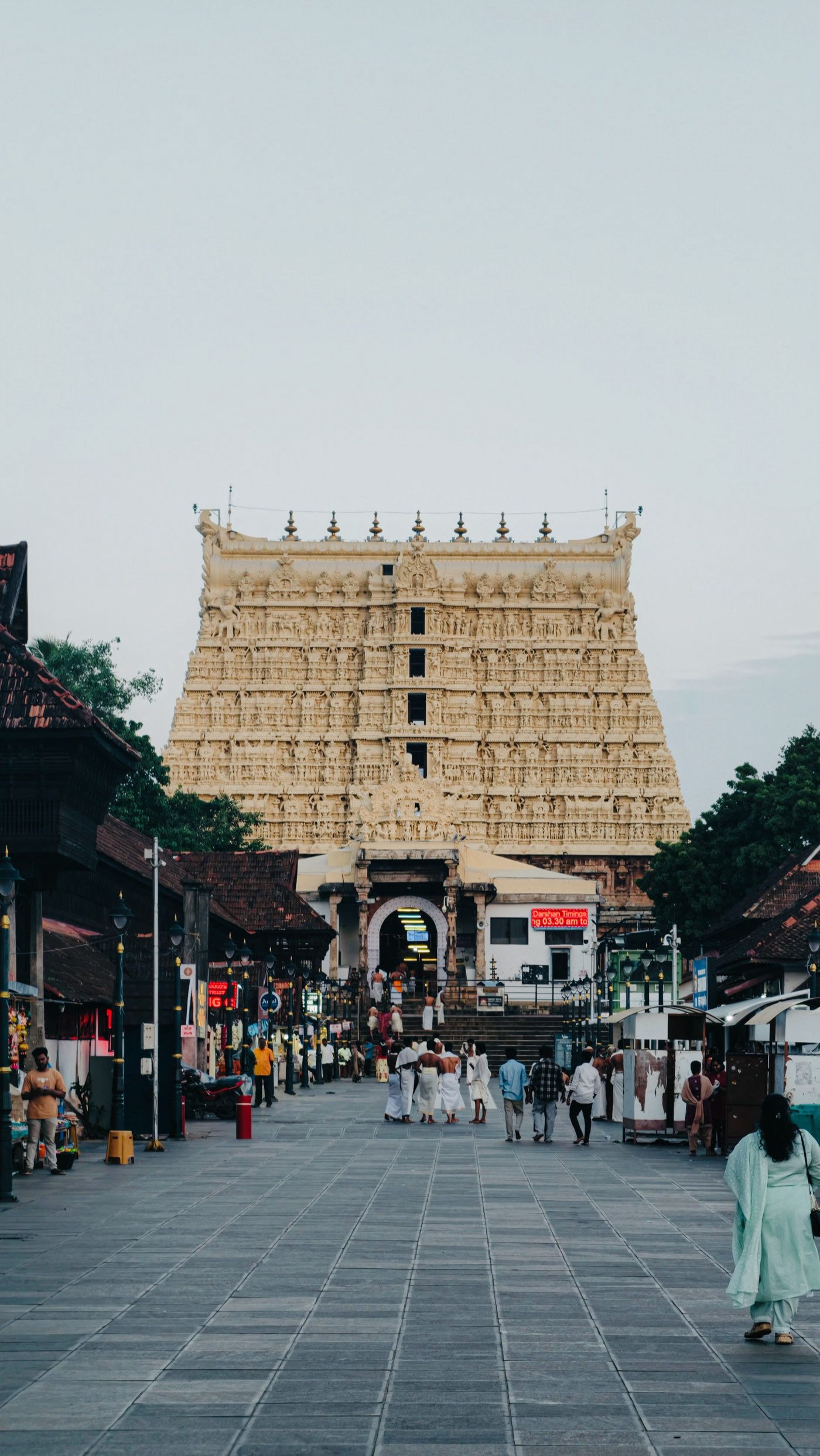
Temple
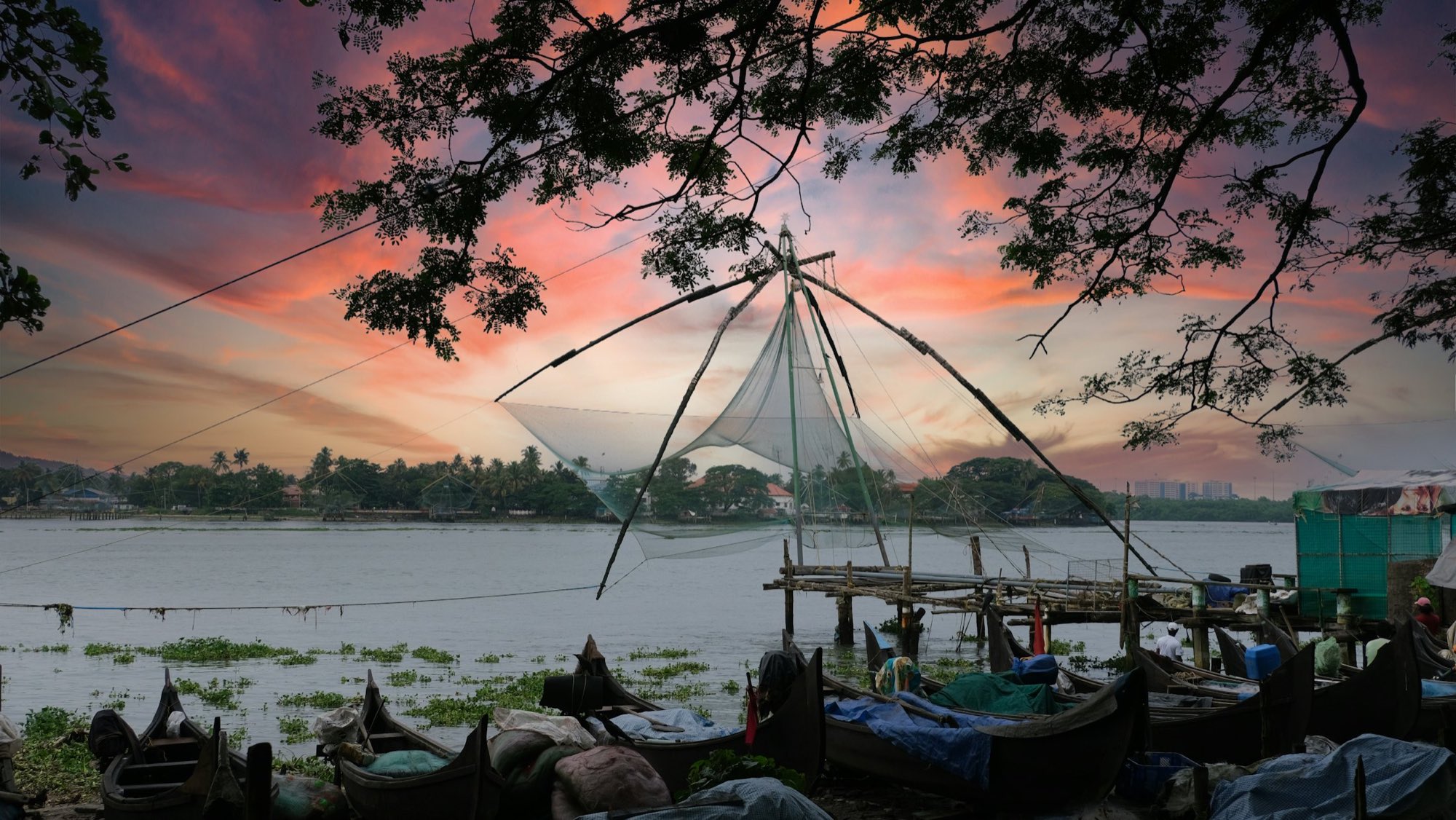
Walk the streets of Kochi.
Synagogue, palace, cathedral and fishing nets, all within a short walk.
Explore Kochi