കേരളം · Keralam
The land of coconut palms
The name Kerala is often read as kera (coconut) + alam (land). It is a strip of green on India's southwest coast, about 580 km long and rarely more than 120 km wide, that has drawn traders, travellers and pilgrims for over two millennia.
Geography
Mountains, monsoon and backwaters
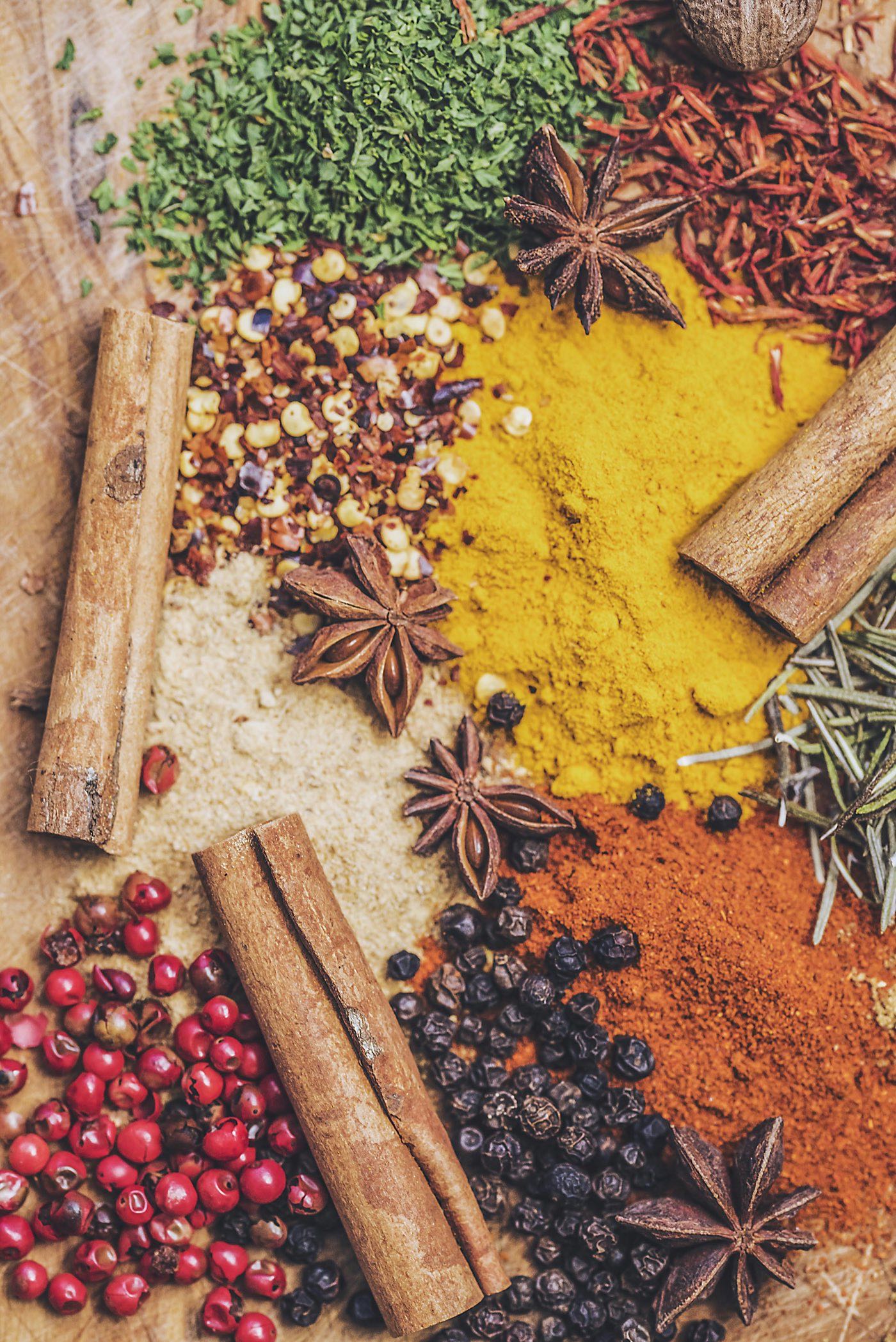
On one side rise the Western Ghats, a mountain range older than the Himalayas and a UNESCO World Heritage Site since 2012, one of the world's great hotspots of biodiversity. Tea and cardamom grow on the cool slopes of Munnar and Wayanad; elephants, tigers and the rare lion-tailed macaque live in the forests.
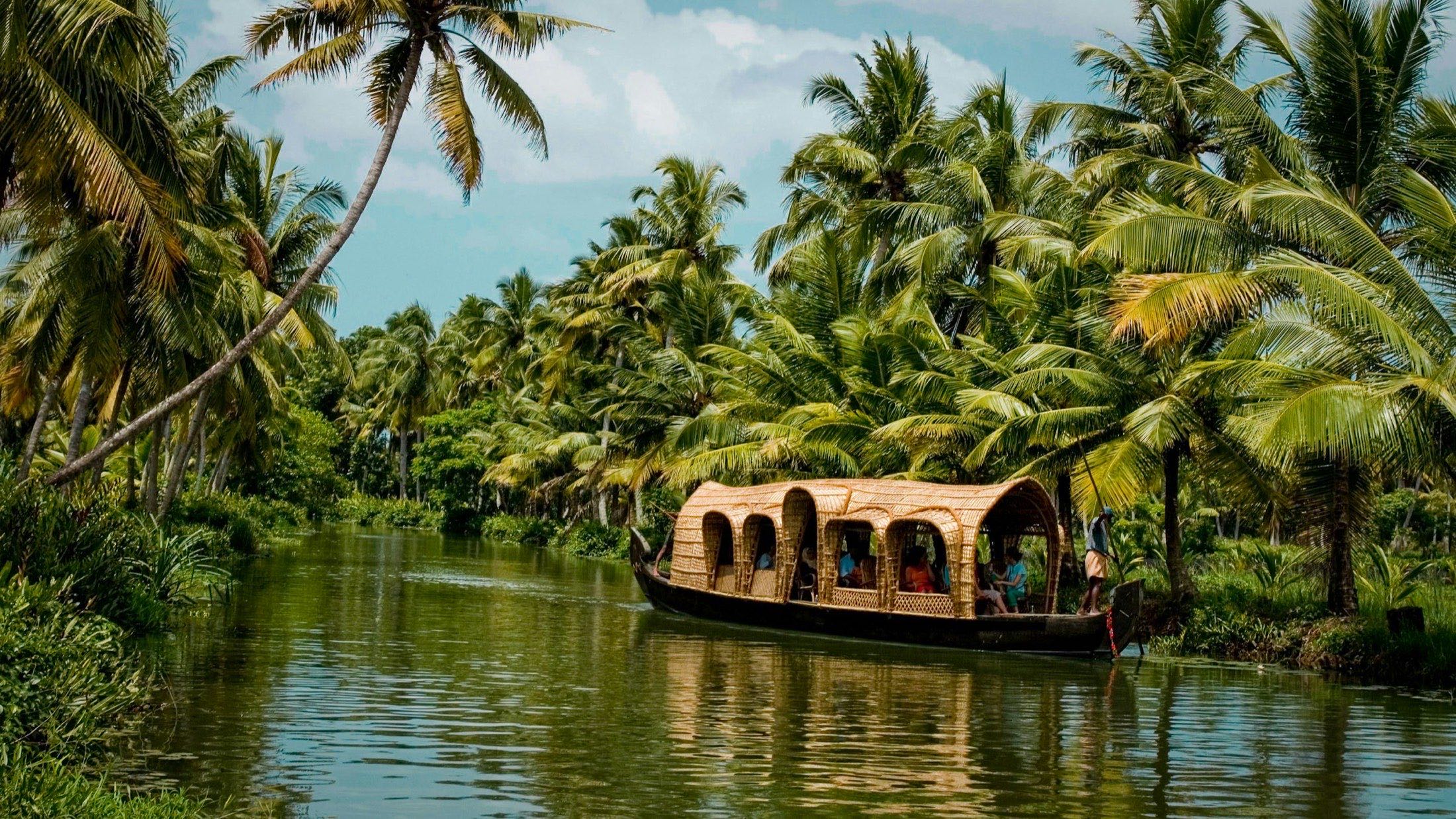
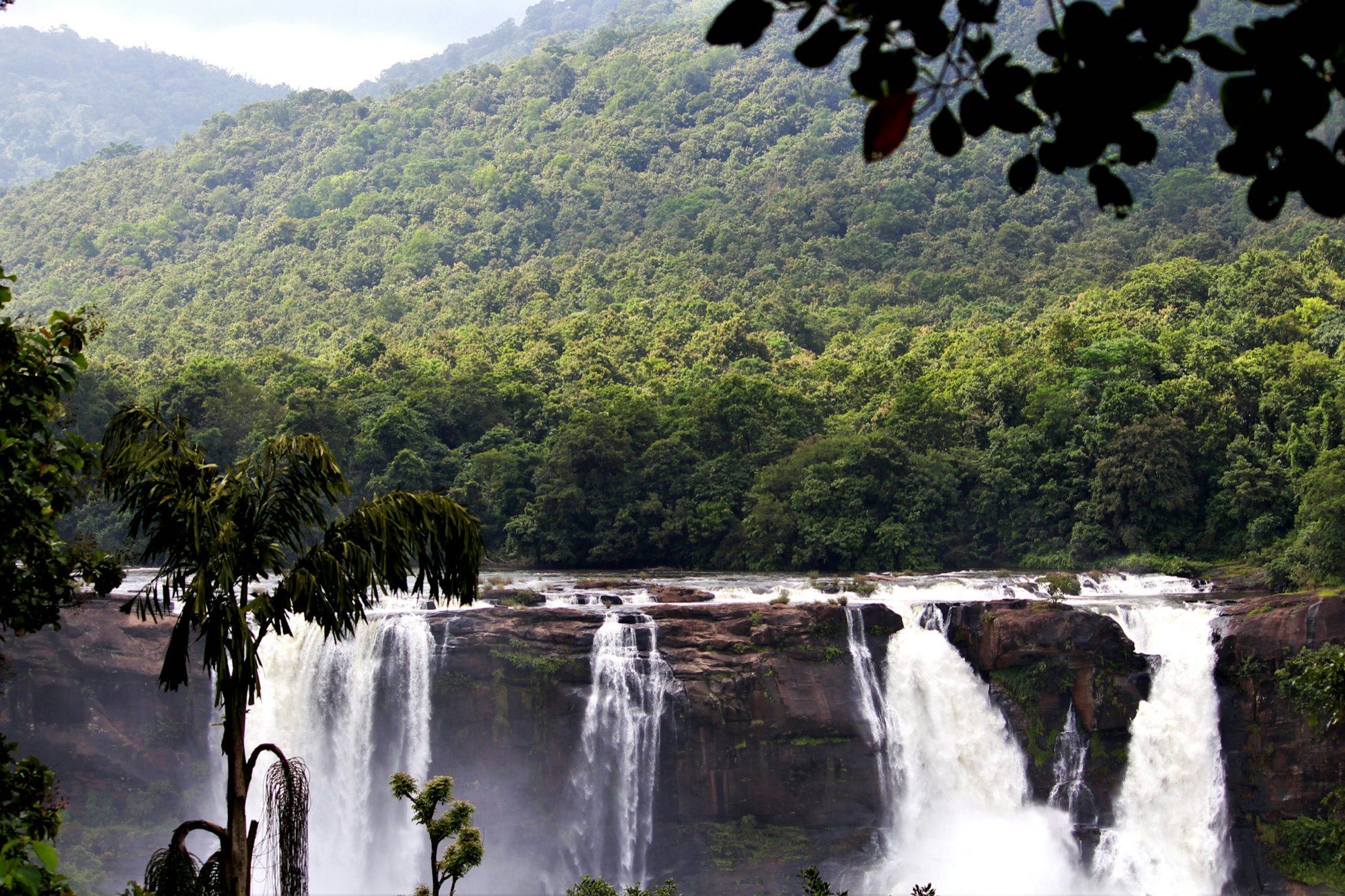
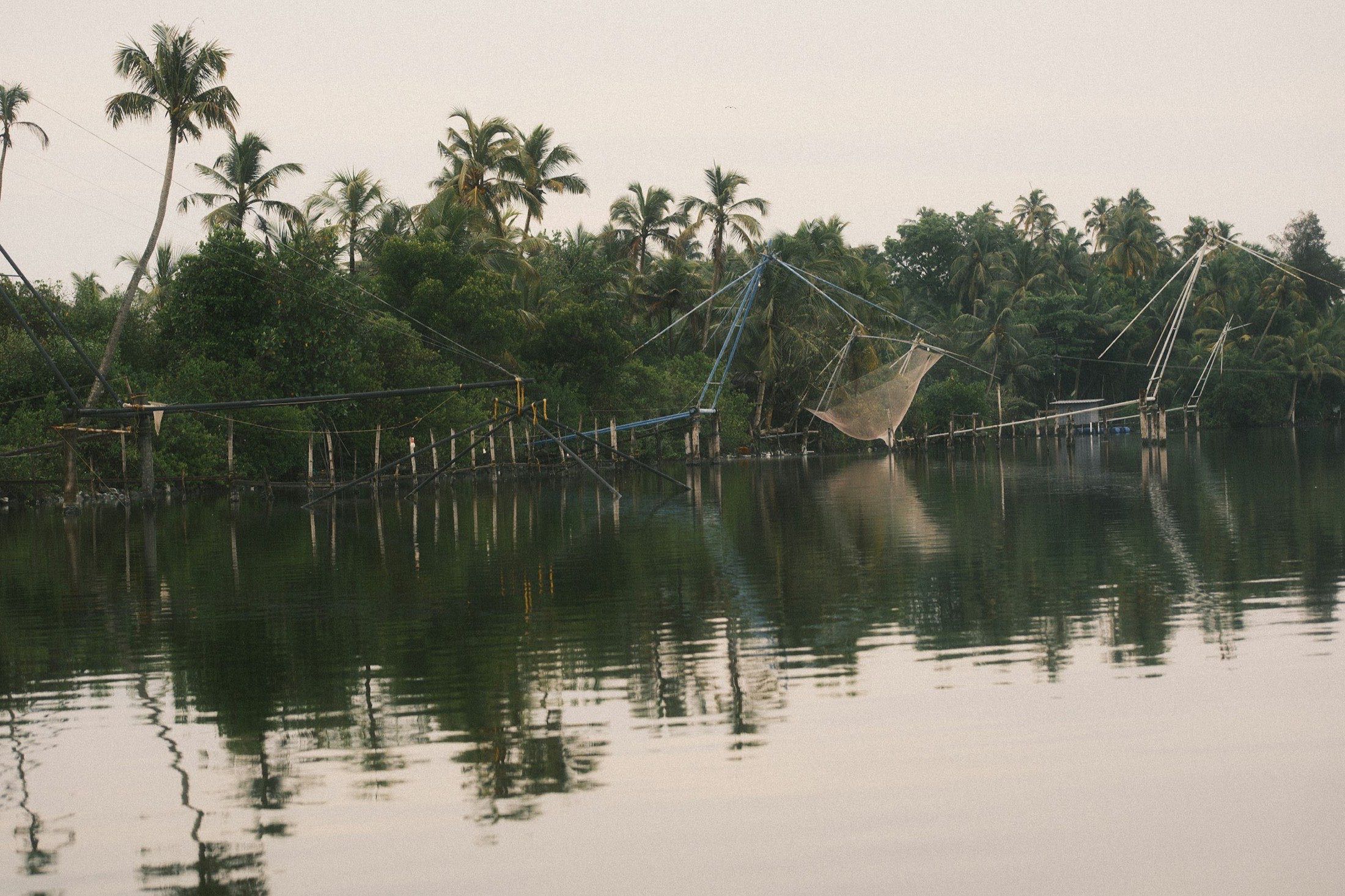
On the other side lies the sea. Between them, forty-four rivers run down to the coast and spread into the backwaters: a maze of lagoons, lakes and canals where villages, rice paddies and coconut groves sit at water level. Life there moves by boat.
Twice a year the monsoon arrives, filling the rivers and turning everything a deep, saturated green.
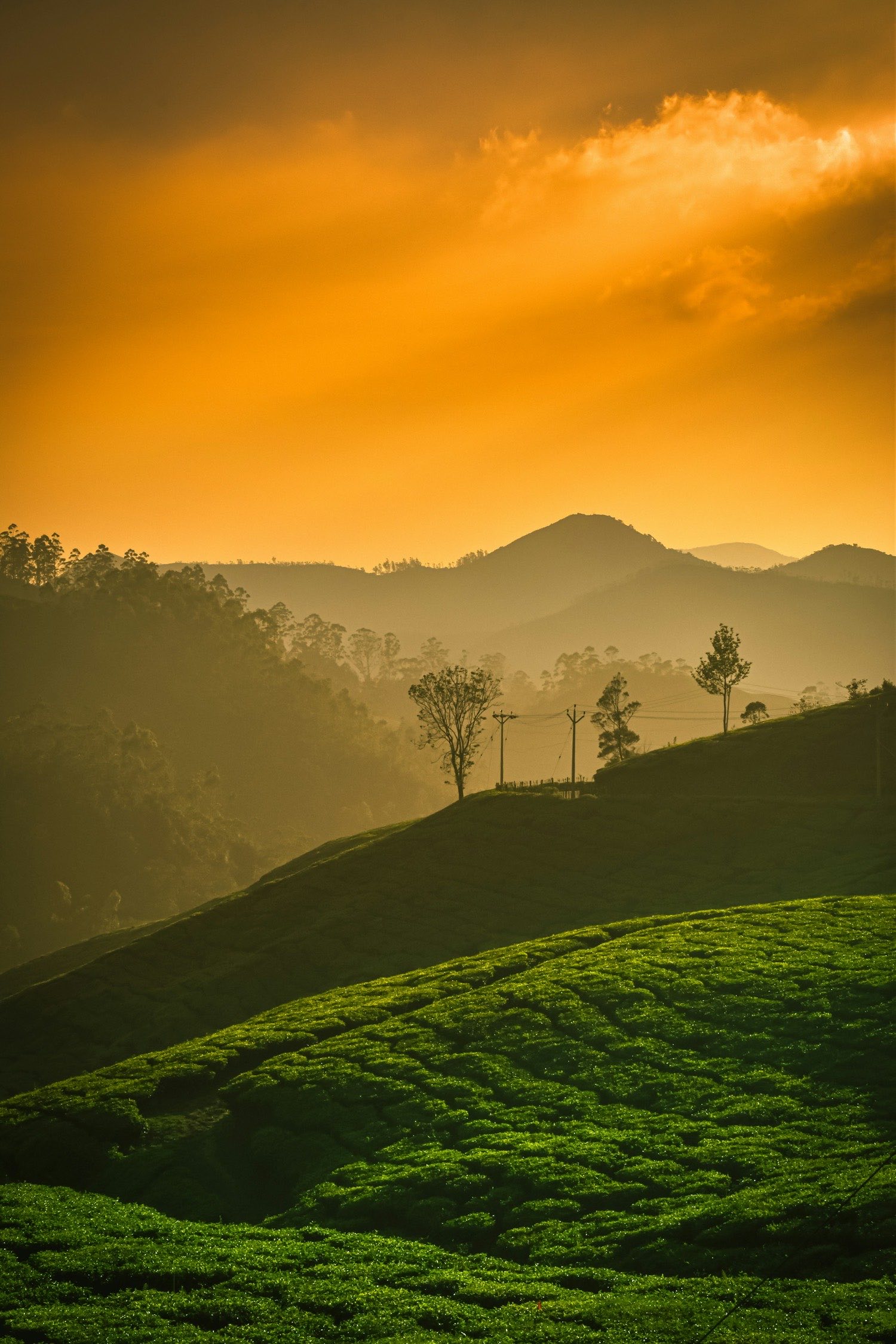 Tea estates of Munnar, Western Ghats
Area, districts and literacy: Government of Kerala and Census of India 2011.
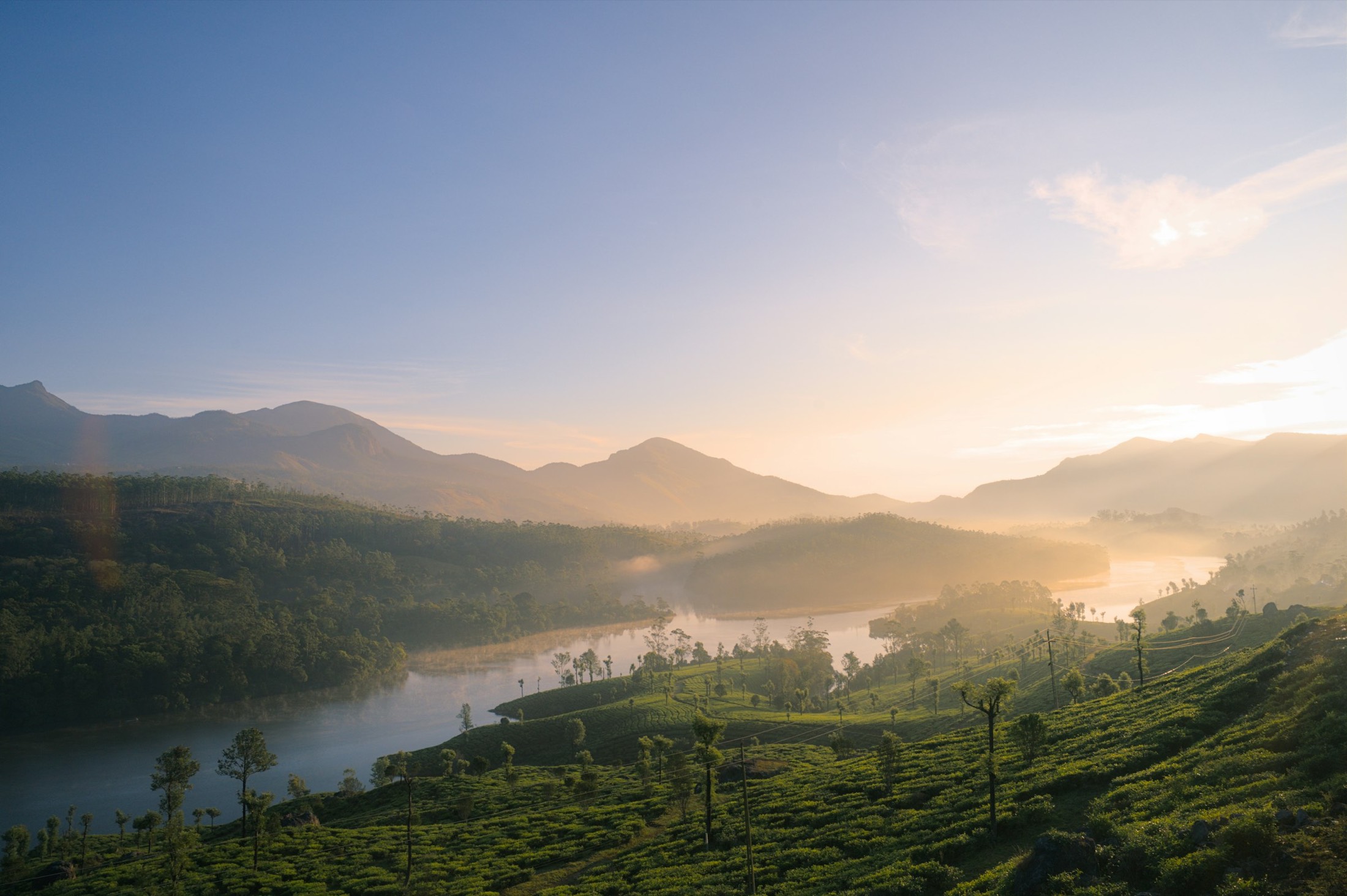
Forty-four rivers. One green coast.
Rivers from the Ghats feed the lakes and lagoons of the backwaters.
Go deeper.
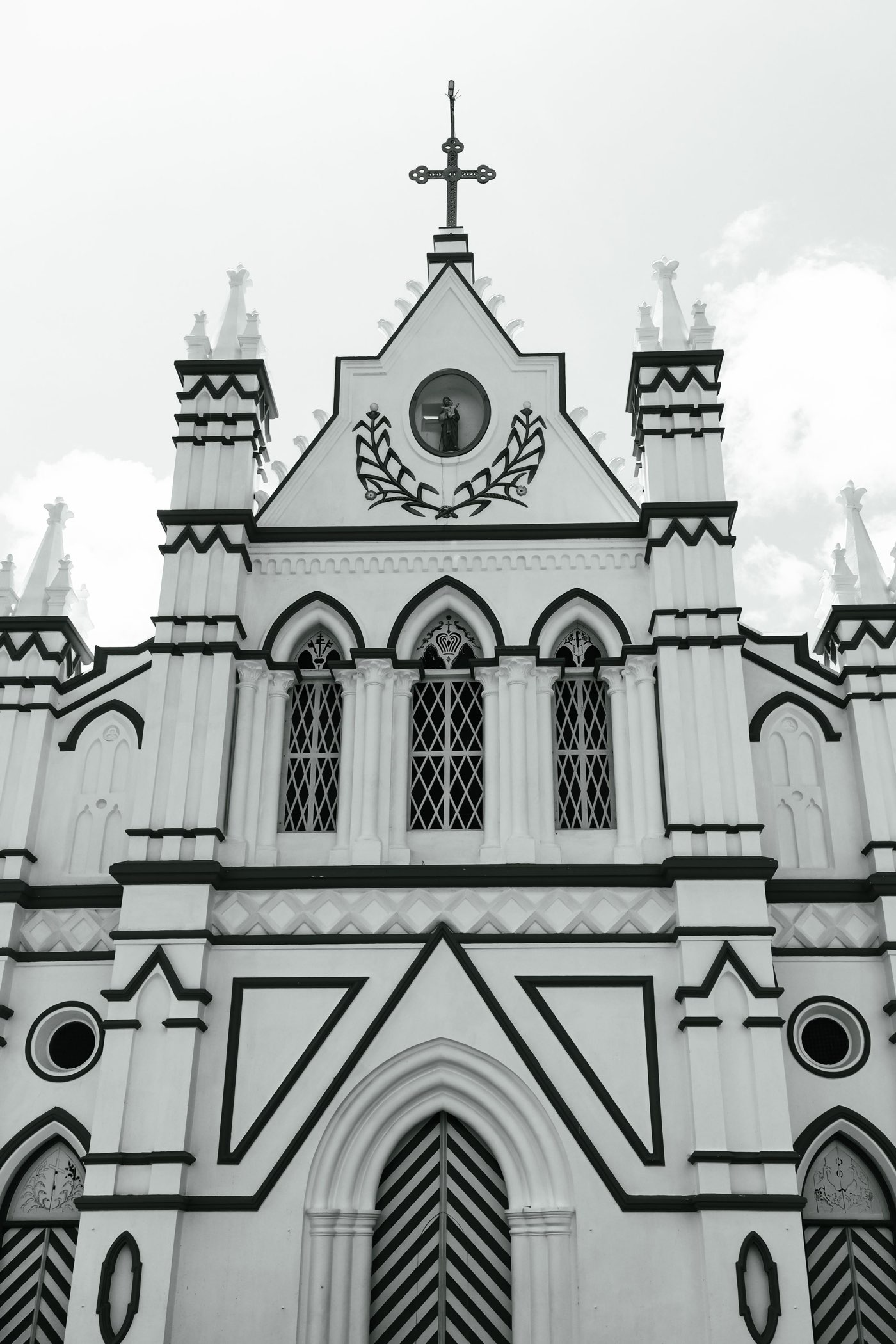
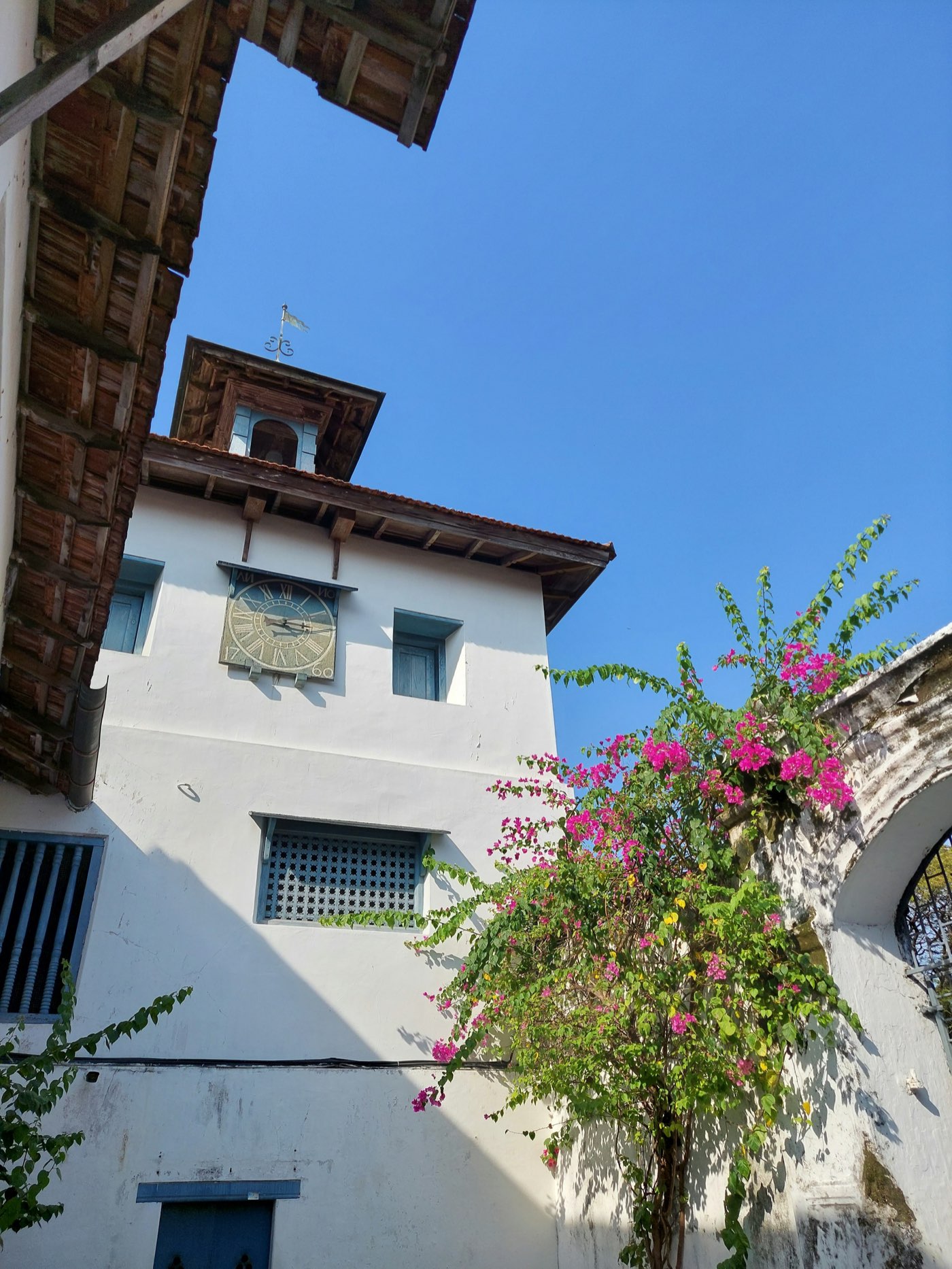
Two thousand years of trade and faith, a harbour city like no other, and the places that make Kerala unforgettable.
The Kerala model
Rich in what counts
Economists, including Nobel laureate Amartya Sen, have pointed to Kerala as an example of how a place with modest income can still achieve outstanding results in literacy, life expectancy and public health. The "Kerala model" is taught in development studies programmes around the world.
The ingredients are simple to name and hard to copy: universal schooling, public healthcare reaching every village, land reform, a strong tradition of public libraries and reading rooms, and the education of girls and women.
Kerala has the highest literacy rate and among the longest life expectancies of any Indian state, and one of the lowest infant mortality rates in the country.
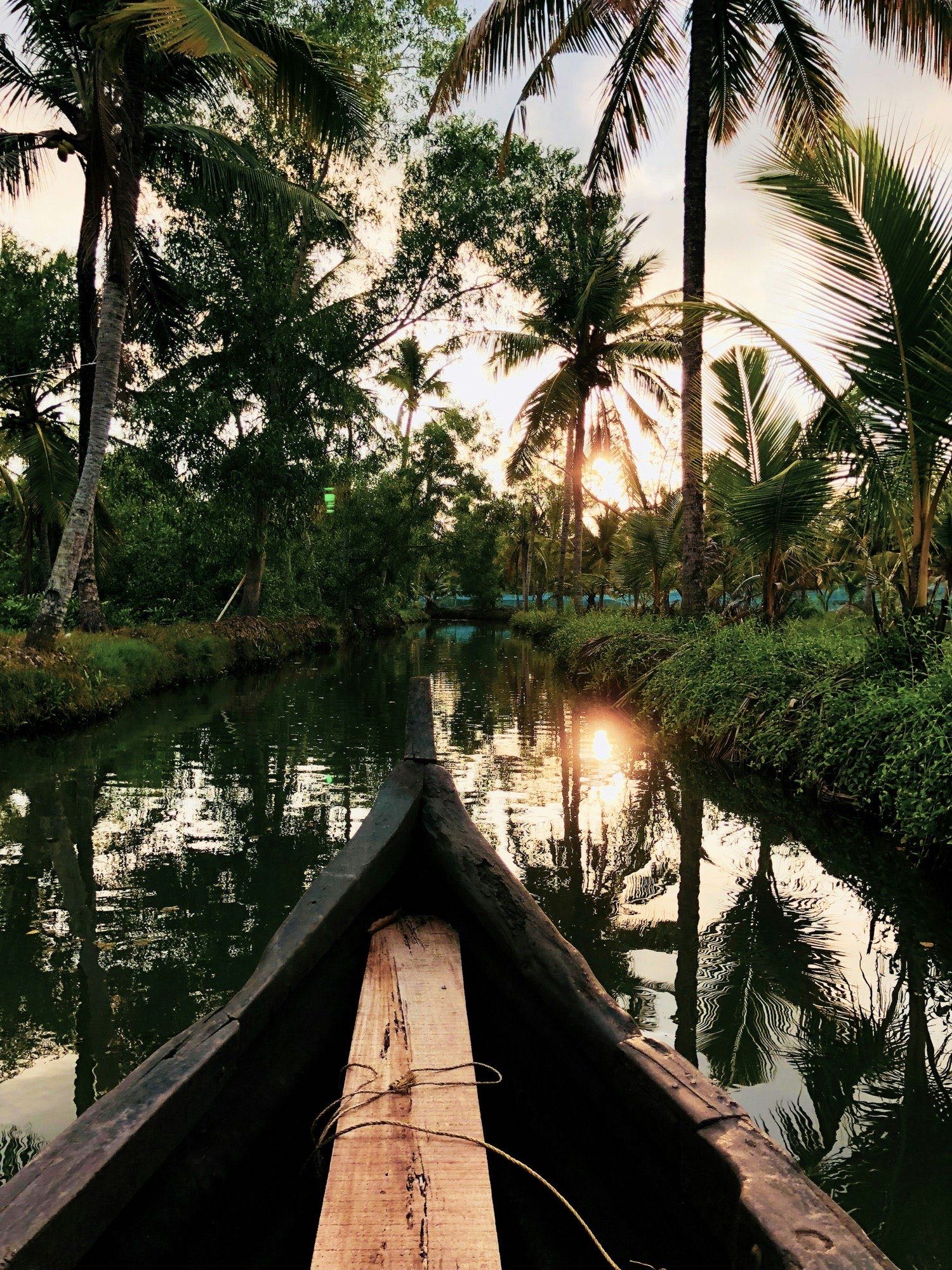 Evening on the backwaters
Did you know?
Kerala, firsts and facts
The first solar-powered airport
In 2015 Cochin International Airport became the world's first airport to run fully on solar power.
Kochi-Muziris Biennale
Since 2012 Kochi has hosted South Asia's largest contemporary art exhibition, drawing artists and visitors from around the world.
Home of Ayurveda
Kerala is the heartland of Ayurveda, India's traditional system of medicine, with treatment centres that attract visitors from across the globe.
Western Ghats
A UNESCO World Heritage Site and one of the world's eight "hottest hotspots" of biological diversity.
Vembanad Lake
The longest lake in India and a Ramsar wetland of international importance, at the heart of the backwaters.
"God's Own Country"
Kerala's tourism slogan has become one of the best-known destination brands in Asia.
Next
Hear the language of Kerala
Malayalam is spoken by around 35 million people and has a script unlike any other. Learn a few words before our next event.
Discover Malayalam